Showing posts with label liberator. Show all posts

Wednesday, October 22, 2014

News: Second Brave Cup Decklists Published, “Abyss”-Mordred Dominates Top 8

Nine hours ago the decklists from Chiba city's second Brave Cup were published, giving names to the decks that topped in the Cup over the 18th. Cup champion Azel is one of the first prominent Liberator cardfighters to emerge in the Neon Messiah-on format, and his victory is also the effective debut of the Bluish Flame Liberators in professional play. Alongside this, the Revenger subclan has come to renewed importance, with five members out of the tournament's top 8 playing Phantom Blaster “Abyss” paired with Mordred Phantom.

Up to this point “Abyss” was primarily paired with Raging Form Dragon as its alternative grade 3, as at the second Hokusetsu CS, third Kansai team tournament, and fifth Tachikawa VGCS. However, the Shadow Paladin use of “Abyss” with Raging Form paled in comparison to its Royal Paladin counterpart Thing Saver, who prior to recent rule reforms was also able to take advantage of “Abyss” as its supporting grade 3. Within the power vacuum created by Thing Saver-“Abyss'” collapse, these Mordred-based have emerged due to a combination of needing to succeed where Raging Form fell short, and as a result of greater discernment on the part of professional Shadow Paladin cardfighters.

This model for “Abyss”-Mordred had already coexisted alongside Raging Form from the beginning of their rivalry at the Hokusetsu championship. The argument for pairing “Abyss” with a break ride versus Form is that he will attack for greater power on his initial attack and every swing thereafter, and that the counterblast costs in “Abyss'” Legion deck are sizable enough that supporting him with Mordred's limit break does not significantly change the damage “Abyss'” restand is being played at. Even after counterblast is exhausted in this build, “Abyss” has a base attack of 22000 to fall back on. And with two Phantom grade 3 options, the subclan's primary first vanguard Judgebau is always available by grade 3. Even accounting for Revenger-specific retire, Judgebau into double Sword Breakers' draw skill is always worth investing because of how overwhelming it is in terms of advantage gain.

Furthermore, running two copies of Dragruler Phantom in addition to Mordred has been common practice for Shadow Paladin cardfighters. The methodology is that each individual point of damage carries greater weight in Legion format than it did in the limit break format, which makes crossbreakriding Dragruler a vital play that can push the opponent to 4 damage and then face down “Abyss” on the next turn as an alternative to jumping straight to “Abyss.” Dragruler also has combo potential with Rakia, a popular grade 1 choice for Japanese Revenger decks; by calling two grade 0s and then retiring them for Dragruler's limit break, Rakia becomes a 13000-power booster to make most rearguard lanes attack for 21000+ power.

Perhaps the most unusual adaptation of the Cup was the emphasis on running both incarnations of Blaster Dark Revenger. The grade 2's “Abyss” incarnation has generally made the circa BT12 pair of Dark Revenger and his custom unflipper Dorint obsolete, consolidating both of their skills into a single counterblast, but every top 4 Shadow Paladin cardfighter at the Brave Cup ran at least two copies of the old Dark Revenger and Dorint. The adaptation is made possible by Mordred's deck searching, and serves both as an alternative to rearguard plays of Revenger “Abyss” and as an unflipping engine to offset the counterblast 1 for Mordred's break ride skill.

Illust. Hagiya Kaoru.
Meanwhile tournament champion Azel's deck is a Bluish Flames build focusing on Prominence Glare from MBT01: Neon Messiah, with the trial deck boss card Percival as his secondary grade 3. Azel's deck is one of the most visible tops to run stand triggers, reflecting one of the latent developments of the Legion format. Some cardfighters are now prioritizing stands over draws due to a combination of the increased importance of the rearguard lanes, less emphasis on hand size where many prominent decks can maintain it innately, and the strong skills being given to stand triggers to compensate for their perceived shortcomings in comparison to the other three trigger types.

In the Liberators' case, Catchgal's skill allows for his cardfighter to superior call a Liberator from the top three cards of the deck when he's called from the deck. This creates a +1 in card advantage where successful, while also synergizing with Prominence Glare's retire skill--for counterblast 1 Glare can retire a Liberator to superior call one from the deck's top four, trading out Catchgal for a more useful rearguard like Josephus or Bruno while also building up towards Legion and eventually cycling that trigger back in.
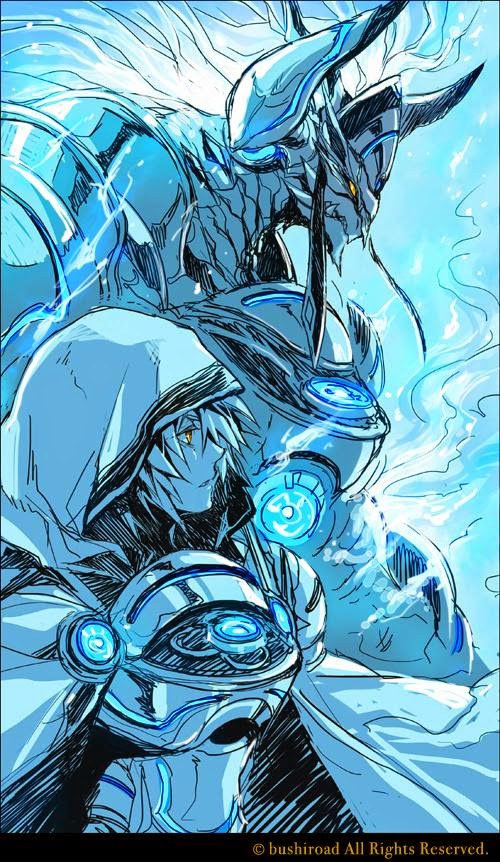
Illust. Hagiya Kaoru.
As a whole Azel's deck focuses on passively building up card advantage through on-call skills, using the top 3 and 4 skills of Percival and Prominence Glare to add cards to the hand off of superior calling Josephus and Destiny Aglovale, and calling further from Lawful Trumpeter and Oaths Aglovale's top 3 skills. This makes it possible to play a field almost entirely from the deck, conserving the hand to put down replacements after dealing with retire skills from Perdition, Revenger and Brawler decks.

Prominence Glare serves as the new Liberators' major push. By discarding one of the deck's eight Bluish Flame cards after calling a rearguard from the deck, Glare gains an additional critical and prevents the opponent from calling grade 1 and greater cards to the guardian circle from their hand when it attacks; this simultaneously blocks perfect defense cards, Quintet Walls, and special defense units like Glendios' Rubidium or the Liberator's own Guinevere. With a center lane in the range of 27000 power, Glare demands 25000 shield for two-to-pass from most vanguards, generally taking out between three and five cards per turn to wear the opponent down while his fighter passively builds advantage off of superior calls.


The Bluish Flame Liberators from TD16: Divine Judgment of the Bluish Flames will be debuting in English alongside the “Abyss” Shadow Paladins from EB11: Requiem at Dusk on November 21st, while those Liberators from TD17 and MBT01 will reach the format on December 16th in VGE-BT16: Legion of Dragons & Blades ver.E.

The VGCS tournaments are a series of unofficial tournaments organized by fans and cardshops. Unlike Bushiroad's larger official tournaments, most VGCS events are done using a best-of-three, Swiss tournament model. Turnout is typically 70-80 persons, but some events see 100 or more participants, all of whom compete using pseudonyms and internet handles rather than their real names as in official events. The VGCS model of fan-organized play has begun to gain popularity internationally, with the bi-monthly BeNeLux tournaments serving as their European equivalent, and there are now similar grassroots organizations emerging in the United States like the ARG Circuit series tournaments and the ongoing King of Cardfight competition in the American midwest.

Second Chiba Brave Cup
First place:
Azel/アゼル
Grade 0
x1 Fire Passion Liberator, Guido (FV)
x4 Liberator of the Holy Tree, Elkia HT
x4 Liberator of Good Luck, Epona CT
x4 Steel Edge Liberator, Alvira CT
x4 Catchgal Liberator ST
Grade 1
x4 Shine Formation Liberator, Eldol
x4 Fast Chase Liberator, Josephus
x4 May Rain Liberator, Bruno
x2 Little Liberator, Marron
Grade 2
x4 Liberator of Destiny, Aglovale
x4 Liberator of Oaths, Aglovale
x3 Liberator, Lawful Trumpeter
Grade 3
x4 Bluish Flames Liberator, Prominence Glare
x4 Bluish Flames Liberator, Percival

Second place: Getsu-ei/月影
Grade 0
x1 Judgebau Revenger (FV)
x4 Healing Revenger HT
x2 Freezing Revenger DT
x4 Grim Revenger CT
x4 Revenger, Air Raid Dragon CT
x2 Grim Reaper CT
Grade 1
x4 Dark Revenger, Mac Lir
x2 Overcoming Revenger, Rakia
x1 Transient Revenger, Masquerade
x4 Barrier Troop Revenger, Dorint
x2 Black-winged Sword Breaker
Grade 2
x4 Blaster Dark Revenger “Abyss”
x2 Battle Spirit Revenger, Mackart
x4 Blaster Dark Revenger
x2 Nullity Revenger, Masquerade
Grade 3
x4 Revenger, Phantom Blaster “Abyss”
x2 Illusionary Revenger, Mordred Phantom
x2 Revenger, Dragruler Phantom

Third place: Healer/ヒーラー
Grade 0
x1 Judgebau Revenger (FV)
x4 Healing Revenger HT
x3 Freezing Revenger DT
x1 Lizard Witch, Aife DT
x4 Grim Revenger CT
x4 Revenger, Air Raid Dragon CT
Grade 1
x4 Dark Revenger, Mac Lir
x1  Self-control Revenger, Rakia
x2 Transient Revenger, Masquerade
x1 Sharp Point Revenger, Shadow Lancer
x4 Barrier Troop Revenger, Dorint
x1 Black-winged Sword Breaker
Grade 2
x4 Blaster Dark Revenger “Abyss”
x2 Overcoming Revenger, Rukea
x4 Blaster Dark Revenger
x2 Wily Revenger, Mana
Grade 3
x4 Revenger, Phantom Blaster “Abyss”
x2 Illusionary Revenger, Mordred Phantom
x2 Revenger, Dragruler Phantom

Fourth place: Lallshare
Grade 0
x1 Judgebau Revenger
x1 Frontline Revenger, Claudas
x4 Healing Revenger HT
x4 Freezing Revenger DT
x4 Grim Revenger CT
x4 Revenger, Air Raid Dragon CT
Grade 1
x4 Dark Revenger, Mac Lir
x2 Overcoming Revenger, Rakia
x3 Transient Revenger, Masquerade
x2 Revenger, Dark Bond Trumpeter
x2 Barrier Troop Revenger, Dorint
Grade 2
x4 Blaster Dark Revenger “Abyss”
x3 Overcoming Revenger, Rukea
x2 Blaster Dark Revenger
x2 Battle Spirit Revenger, Mackart
Grade 3
x4 Revenger, Phantom Blaster “Abyss”
x3 Illusionary Revenger, Mordred Phantom
x1 Revenger, Dragruler Phantom

Monday, October 20, 2014

News: Liberators Win Second Brave Cup Championship, Revengers in Second

Chiba city, Japan. Three months ago the first Brave Cup was just one of five of Thing Saver-“Abyss'” latest victories, but following the implementation of the modified Fighter's Rules the deck has vanished overnight. The second Brave Cup held over the 18th has become an example of the Revengers' renewed dominance and the rise of the new Kagerou in professional play. Pure Thing Saver decks still controlled a significant fraction of the Cup, making up almost 16% of the competition. Dragonic Overlord decks accounted for approximately 26%, while the Revengers made up 24% of the tournament.

The Brave Cup's top 8 were four Revenger, two Liberator, one Regalia and one Seeker cardfighters. As illustrated by the deck breakdown below, this most recent shift in Japanese play has moved towards the next most successful restanding decks, Dragonic Overlord the Great and Raging Form-“Abyss.” The surprise factor in the tournament was the dearth of Blaster Joker cardfighters. Forecasted from the moment of its announcement as a much stronger contender in the present format than Glendios and a specific counter to most Legion decks, Joker's lack of a strong card advantage game and omega lock skills has proved to be a serious setback versus the aggressive retire and restand-centric focus of the format.
Deck breakdown (89 participants in total)
23 Overlord
1 Kagerou
14 Thing Saver
1 Vanguard of the King of Knights, Ezer
21 Revenger
8 Liberator
5 Regalia
3 Brawler
1 Dimension Robo
1 Metalborg
2 Link Joker
2 Deleter
2 Great Nature
1 Ezel
1 Pale Moon
1 Battle Sister
1 Raizer
1 Beast Deity
The remaining top 16 included two additional Revenger, three Seeker, three Liberator, two Perdition Dragon, one Regalia and one Battle Sister cardfighters. One blogger gave a tourney report of his experience going 1-2 in the Cup with a Purgatory Dragon deck. Faced with a Kagerou mirror match in the first round, a Revenger fighter in the second and a Thing Saver fighter in the third, he won the first round by double critical trigger and lost the second, and third by gradelock. Expressing sadness at the results and frustration at using Gojo's card changing skill ten times and still not drawing a grade 3, his report illustrates one of the primary differences in how VGCS tournaments have come to operate; the preliminary rounds of tournaments are now commonly held in a best-of-one format in the interest of time, with best-of-three being reserved for the top 16. During the elimination rounds fighters frequently only have 20~30 minutes to play, while the top cut receives a full hour for its three game format. Proponents of this system have countered that the top 16 having access to best-of-three is an important improvement over Bushiroad's system, and with closing ceremonies already not concluding until 9:00 PM there are few other options available.

Entry fee at Chiba was 1000 yen per persons, with a maximum capacity of 96 fighters. Tournament format was five rounds of best-of-one Swiss draw, followed by a cut to top 16. The winner of the tournament won an unofficial rubber playmat featuring several Revenger series Shadow Paladins, as well as two movies of VG-MBT01: Neon Messiah. Third place received three boxes of the Movie Booster, while fourth received two boxes, and fifth through eighth one box. The Swiss rounds lasted from 11:30 AM to 1:50 PM, with an hour lunch break from 2:00 to 3:00 PM. The top 16 was played out from 3:10 to 5:00 PM, with the semifinals and finals taking place at 5:10 and 6:10 PM, finishing at 7:00.

Rather than following Bushiroad's official rules for regulating games hitting their time limit, the Brave Cup used its own ruleset wherein when the time limit is reached, a count is made with the turn player's current turn as turn 0, and at the end phase of turn 2 the player with less damage is declared the winner. If damage between the players is tied, play continues until a change in damage is reached.

The VGCS tournaments are a series of unofficial tournaments organized by fans and cardshops. Unlike Bushiroad's larger official tournaments, most VGCS events are done using a best-of-three, Swiss tournament model. Turnout is typically 70-80 persons, but some events see 100 or more participants, all of whom compete using pseudonyms and internet handles rather than their real names as in official events. The VGCS model of fan-organized play has begun to gain popularity internationally, with the bi-monthly BeNeLux tournaments serving as their European equivalent, and there are now similar grassroots organizations emerging in the United States like the ARG Circuit series tournaments and the ongoing King of Cardfight competition in the American midwest.

Decklists from Chiba have not yet been published.

Sunday, June 16, 2013

News: Spike Brothers Tops Hiroshima's Open Division Regional

Although high hopes have been pinned on the clan ever since Bad End Dragger's unveiling in VG-BT10: Triumphant Return of the King of Knights, in general the Spike Brothers clan's tournament results have not been above the bar set by the 2013 format shift. This trend was overturned earlier today, when Doctor O reported the Hiroshima regional results for the ongoing Japanese national championship, where a determined Spike Brothers cardfighter placed first in the tournament brackets, breaking the Eradicator-Liberator deadlock that has persisted since the onset of the current tournament season. Second place went to a Gauntlet Buster deck, while the Junior class tournament has seen Kagerou remain a consistent favorite, with Dauntless Drive Dragon breaking into first place. The tournament decklists should be out later this week.

The remaining four tournaments will take place in Fukuoka, Tokyo, Sapporo and Nagoya with the Fukuoka tournament being next in line on the 22nd. This will be the first time that Fukuoka prefecture has been included in the national tournament, and also the first time that Okayama, Hakata and Osaka will not be participating.

Thursday, June 6, 2013

News: Death Army and Battle Sister Cards to Storm North America in September, TD08 & 09, BT10 for October Release


This morning Bushiroad took the world by surprise with the official announcement of western release dates for two extra boosters, two trial decks and two booster sets, laying out their schedule of releases for up through December 2013. VGE-EB04: Infinite Phantom Legion will reprint many Nova Grappler units from BT01-BT06, including the clan's perfect defense card Twin Blader, and an alternate artwork of EB01's Perfect Raizer from the same artists that designed and illustrated the original, Itou Akira and ToMo. EB04 will also introduce new Death Army series cards, including a remake of BT03's Ultimate Lifeform Cosmo Lord, Infinite Death Army Invader Cosmo Lord. EB04 is slated for a September 6th release.


VGE-EB05: Celestial Valkyries will give the same treatment to Oracle Think Tank, reprinting key units from BT01-BT05, with one of those being an alternate artwork of the clan's boss card CEO Amaterasu, illustrated by Hitowa, the same artist behind Water General of Wave-like Spirals Benedict, and Goddess of Good Luck Fortuna. Celestial Valkyries will also bring new Battle Sister units to OraThin's card pool, fleshing them out into a powerful subgroup. EB05 is slated for a September 6th release.

VGE-TD08: Liberator of the Sanctuary will be the second Gold Paladin trial deck to be released, restarting the clan from the ground up through the Liberator subgroup of cards, which focus on the use of the new Blaster Blade Liberator as the axis of one's deck and applying key power increases to the whole field through the new break ride mechanic. After their initially disappointing run from TD05 through BT09, these new Gold Paladins breath new life into the clan by reimagining old cards like Gancelot and Gallatin. TD08 is slated for an October 4th release.

VGE-TD09: Eradicator of the Empire will introduce the Eradicator subgroup for Narukami, allowing selective control of the opponent's front row through break ride. While TD08's support is generally designed to encourage the use of new Liberator units, and TD09 provides similar support, TD09 is also geared toward more generic support for non-Eradicator decks through its Vowing Sword Dragon key card. TD09 is slated for an October 4th release.

VGE-BT10: Triumphant Return of the King of Knights will reinforce the Liberators to allow for an additional focus on the center line in addition to the rearguards, through its key card Liberator of the Round Table Alfred. It will also revive the Royal Paladins as the critical-focused Jewel Knight subgroup designed to emulate the strengths of the previous Blaster cards, and bring in the new, soulblast-focused Genesis clan used by Tokura Misaki during the third season of Cardfight!! Vanguard. Unlike Oracle Think Tank, Genesis is built around rapidly filling up and then discharging the soul for simultaneous draw power and power boosts, giving both short-term power and long-term longevity so long as their fighter can pay the extraordinary costs. BT10 is slated for an October 25th release.
VGE-BT11: Seal Dragons Unleashed will bring the new Seal Dragon series to the fore, while bringing the Dragonic Overlord The End deck its own break ride in Dauntless Drive Dragon, allowing up to six and eight drive checks in a single turn. Just as BT10 is the third season's reimagining of BT01, BT11 is its equivalent to BT02, focusing on breaking the seals imprisoning powerful dragons. The Seal Dragon series will reinforce Kagerou by using Seal Dragon Blockade from BT02: Onslaught of Dragon Souls as its focal card, both reprinting the unit and introducing the Blockade Inferno crossride. Although crossrides are generally regarded as a thing of the past due to their low payout relative to the setup required in the extremely aggressive BT10-on format, Blockade Inferno has been given special attention from professional cardfighters for the devastating power of his limit break and the overall synergy between him, his sealed form and his supporting Seal Dragon rearguards. BT11 is slated for a December 13th release, making it the last English release of 2013, coming out just three days after the international anniversary of VGE-BT01: Descent of the King of Knights.

Sunday, May 12, 2013

News: Doctor O Tweets BCF2013 Vanguard Stage in Sendai Results

Doctor O tweeted the results of the Bushiroad Cardfight 2013 Vanguard Stage this morning through his official account, revealing the outcome of the Senior and Junior tournaments held on the 12th. BCF2013 is part of a nationwide tour lasting through July, which also forms the Fighter's Road 2013 summer national tournament. Of the sixteen finalists for FR2013, eight of them will be determined through BCF2013 events, with four others being Asia Circuit Memorial Tournament champions, and four more being finalists from the Great Vanguard Festival event. The eight participants for the Juniors division of FR2013 will be coming purely from the Fighter's Road 2013 regional events. Only elementary students and younger may participate in the Juniors division, while the Seniors division is open to all ages.

 
While the decklists and names are not yet available, Doctor O stated that the Senior champion used a Gauntlet Buster Dragon-based Narukami deck, while the runner up was also using a Narukami deck, but based on Sweep Commando Dragon. The Junior champion is one of the first major Kagerou victories in a long time, taking the top spot with a Seal Dragon deck, while the runner up used a Gold Paladin Liberator deck.
The remaining seven tournaments will take place in Kyoto, Kanazawa, Hiroshima, Fukuoka, Tokyo, Sapporo and Nagoya. This will be the first time that the Fukuoka and Kyoto prefectures have been included in the national tournament, and also the first time that Okayama, Hakata and Osaka will not be participating.

Tuesday, May 7, 2013

News: May Vanguard Championship Results, Eradicators Stay Strong in Face of Restricted List, Celestials Reach Top 16

The results of the most recent Vanguard Championship have come in, opening the month of May with a look at how the new restricted list will affect the format. As a preemptive measure, this VGCS event adopted the May 11 restrictions before they will actually take effect later this week. This time being held in the Hachiouji Civic Center in Hachiouji, Tokyo, the event drew 114 participants. Pairings were put together using the Swiss system, with the opening rounds conducted over the course of 20 minutes; 50 minutes were allotted for a best of 3 format among the top 16 fighters. Unlike in the previous tournament, matches were not recorded on camera.

The VGCS tournaments are a line of unofficial, amateur tournaments organized by fans and card shops and coordinated through the internet. The tournament environment is fiercely competitive, and unlike in Bushiroad's official tournaments, it's customary for participants to compete under pseudonyms and internet handles rather than using their real names.

First place was taken by Tonkatsu ("Pork Cutlet") and his restricted Dragonic Descendant deck, displaying greater break ride synergy and the integration of cards from BT11 to overcome the deck's more limited capabilities. Second went to Gaga's Liberator build, with third and fourth places going to other, almost-identical Descendant decks. Surprisingly, Dragonic Overlord The End did not do as well as predicted within the tournament, only placing within the top 16 and being ousted from the best 8 by CoCo-Cookie Oracle Think Tank decks, and Blockade Inferno was likewise low on the list. Majesty Lord Blaster has continued to maintain a competitive presence, penetrating into the top 16 with decks that use five and three grade 3s respectively. The most interesting development is the presence of a Celestial deck within the top 16, as Angel Feather has never been one of the top competitive clans, so its steady emergence into the height of amateur play may prove promising for how the world of professional cardfighters approaches it in the new format.

Of the clans participating in the tournament, there were 31 Narukami, 19 Kagerou, 15 Royal Paladin, 14 Oracle Think Tank, 7 Gold Paladin, 7 Angel Feather, 6 Genesis, 5 Tachikaze, 5 Aqua Force, 1 Bermuda Triangle, 1 Pale Moon, 1 Spike Brothers, 1 Neo Nectar, and 1 Shadow Paladin decks. First place received a Nintendo 3DS LL along with a copy of Cardfight!! Vanguard Ride to Victory. Second place won a regular 3DS, third two boxes of VG-BT11: Seal Dragons Unleashed and fourth one box of BT11. Fifth through eighth places received a box of VG-EB06: Dazzling Divas.

First Place
Grade 0
x1 Spark Kid Dragoon (FV)
x4 Eradicator Yellow Gem Carbuncle CT
x4 Divine Spear Eradicator, Pollux CT
x3 Eradicator Dragon Mage DT
x4 Demonic Dragon Eradicator, Seiobo HT
x1 Spark Edge Dracokid CT
Grade 1
x4 Eradicator, Demolition Dragon
x3 Iron Blood Eradicator, Shuki
x4 Eradicator Wyvern Guard, Guld
x3 Rising Phoenix
Grade 2
x4 Eradicator, Spark Rain Dragon
x4 Dragonic Deathscythe
x3 Fiendish Sword Eradicator, Cho-Ou
Grade 3
x4 Eradicator, Gauntlet Buster Dragon
x2 Eradicator, Vowing Sword Dragon
x2 Eradicator, Dragonic Descendant

Second Place
Grade 0
x1 Spring Breeze Messenger (FV)
x4 Strike Liberator CT
x4 Liberator of Hope, Epona CT
x4 Weapons Liberator, Gwydion DT
x4 Elixir Liberator HT
Grade 1
x4 Little Liberator, Marron
x4 Curved Blade Liberator, Yoseph
x4 Halo Liberator, Mark
x2 Silver Fang Witch
Grade 2
x4 Liberator of Royalty, Phallon
x4 Liberator of the Flute, Escrad
x4 Blaster Blade Liberator
Grade 3
x4 Liberator of the Round Table, Alfred
x3 Solitary Liberator, Gancelot

Top 16 Celestial Deck
Grade 0
x1 First Aid Celestial, Penuel (FV)
x4 Celestial, Landing Pegasus DT
x4 Punishment Celestial, Shemhazai CT
x4 Healing Celestial, Ramiel CT
x2 Rampage Cart Angel CT
x1 Critical Hit Angel CT
x1 Rocket Dash Unicorn CT
Grade 1
x4 Adamantine Celestial, Aniel
x3 Marking Celestial, Arabaki
x3 Underlay Celestial, Hesediel
x3 Order Celestial, Yeqon
x2 Battle Cupid, Nociel
Grade 2
x4 Wildshot Celestial, Raquel
x4 Candle Celestial, Sariel
x3 Essence Celestial, Becca
Grade 3
x4 Solidify Celestial, Zerachiel
x3 Prophecy Celestial, Remiel

Tuesday, January 15, 2013

How Long Can the Golden Goose Keep Laying?

Photo by rawritzrichii, seek consent before reposting.
In light of the December 9 results and the close of the 2012 World Championship, one thing has become clear; the Gold Paladins are strong. They have become the third most prolific clan in history, on the heels of Kagerou and their Royal predecessors. Being able to fill the field, draw new cards and break traditional defenses with powerful limit breaks are all key aspects of their success. Bandwagoning is also an element here--if 98 out of 100 decks at a tournament are Etranger, then at least 6 of the top 8 decks will be Etranger regardless of if those decks are any good. Even considering this however, the strengths of the clan are very real. At the very least, Smith, Bastianelli and Fernau did believe in the clan's power. In the world of pros, they are a real threat, but like any other threat they have weaknesses.

In particular, their dominant weakness has been evident since the first booster set. Garmore is the best card that the clan has ever printed; Ezel is only ever run for the opportunity to superior ride him, and occasionally his autoskill when stalling for Garmore. If the Gold Paladins had an exact copy of the King of Knights or of Soul Saver Dragon, that would be run instead. Spectral Duke Dragon is not the monster in Japan that he is on our side of the Pacific, because his sometimes-on sometimes-off +1000, intended to attack independently multiple times in a match, functions poorly in a format where stable 11000, 12000 and 13000 dominate. Even the Gold Paladins' coming crossride, Platina Ezel, is considered vastly inferior to previously-revealed crossrides that were not reliant on being at five damage. The End and even Goddess Amaterasu woul be run instead if they had Gold Paladin equivalents. Probably the most harrowing difficulty for the clan is that the general design theme is "Royal Paladin but weakened." There is no doubt that if sets 4 and 5 had been available during WCS2012, the clan would have been vastly undermined by Majesty Lord Blaster. This leaves a pressing question for the western community of Gold Paladin cardfighters who have grown endeared to their clan.

Come February, BT05 will be available, and by all estimates will be a serious factor in WCS2013. Where does that leave the Gold Paladin cardfighter? For how long can the golden goose keep laying? This is entirely dependent on BT10: Triumphant Return of the King of Knights. The recent team tournament results have shown that both primary variants of Gold Paladin can work well on the same team as Royal Paladin and Oracle Think Tank decks, much as Kagerou did in the 2011 Grand Prix team tournaments, but Platina/Spectral Duke is also competing for that space with Dragonic Kaiser Vermillion "THE BLOOD," who has seated himself as a new, ultimate break-impaired The End. We have yet to see how Platina holds up to its contemporaries in the seniors' and juniors' divisions, or to the new, Tsukuyomi-derived Blaster build.

Liberator Gancelot is an excellent replacement for Platina, hitting 23000 on-attack with Tron or Llew and throwing a second Gancelot up to 33000 with his break ride. Gancelot is not just an upgrade, but also a countercard that close to replaces the BT09 play style. However, one card cannot carry a clan. The Liberator subgroup is definitely one of the most powerful subgroups to ever be designed, but like all Gold Paladin decks, it is still reliant on first vanguards that depend on Ezel or Pellinore. Running Corron or Kyrph means running Ezel and/or Gareth with Beaumains, severely restricting a deck that would ideally be composed as close to as purely of Liberator units as possible. Running Spring Breeze means running Lop Ear Shooter and potentially Dindrane for an overall similar restriction, but even more than that, it means running Pellinore who has been ruled as not being a superior ride and as a result, canceling Gancelot's carefully-prepared break ride. Gold Paladin cardfighters are left holding out for the new Wingal Liberator and with him the new Alfred, leaving the future murky and uncertain for a clan that in Japan was repeatedly established as underdogs. Even beyond this, the Eradicator and Dudley subgroups are already receiving quite a bit of attention from pros as more likely to replace Spectral Duke and Garmore/Gancelot, respectively.

The English pro scene will soon be left to clash over the set that will finally induct us into the crossride format that has defined much of Japan's professional play for the past year. Despite that, it is already clear that The End will not be storming the format as some doomsayers have predicted. There are two reasons for this; first, the English scene is becoming updated with the more recent sets at a relatively fast pace, introducing new counter decks and reinforcing past decks. Second, the focus of Vanguard has shifted. We are at the end of an era--you could call it the end of the vanguard. Powerful vanguards are no longer a concern in the new format. No matter how much power you gain or extra critical you add on, this cannot circumvent a perfect defense card, cards which in the English format have been standardized at four copies by limit break. While some predictions say that Glory Maelstrom will respond to this by ending the perfect defense, the situation is not equal. While he does get over Duke's base power consistency issues, the new Maelstrom can only do this when he is on the brink of death, and it's clear from playtesting by now that fighting a Maelstrom deck is a matter of changing one's play style. Shields are placed earlier and more frequently, the rearguard becomes the focus of defense, and the vanguard is either not guarded against or grade 0s are conserved for fighting Glory and perfect defense goes to the rear. The situation plays out like jan-ken-pon; the Gold Paladins are undermined by Majesty, who is locked down by The End, who is shut out by Gold Paladin counterdecks that are defeated by Majesty. The most prominent major player living outside of these restrictions is Oracle Think Tank, whose CoCo and Battle Sister play styles neatly stops both the Blaster deck and crossride decks in their tracks, but even they then fall to the Gold Paladins. To who does the throne at the top of the world go to from here? This year's cup is open to everyone.

I am not in the business of naming kings. Blaster Blade Liberator will probably be revealed close to or over the weekend, being the final card from TD08 and TD09 to go unrevealed. This unit will be our last chance before February to gauge the new Gold Paladin, and with it how the Gold Paladin cardfighters of the previous year will plan for WCS2013. While my own investment is strictly centered on my personal clan, it will be interesting to see cardfighters both in the United States and abroad rethink their strategies. The natural position, even not knowing exactly what BT10 will bring, is to assume that Gancelot will be supported by Alfred, with extra copies of the Liberator himself replacing Gigantech Destroyer and Manawydan as a rearguard grade 3, but some fighters may still stick by Garmore or even find the "perfect" offensive grade 3 in Dignified Gold Dragon, who combines the Silver Wolf's and the Destroyer's roles into a single unit. How will traditional Gold Paladin fare once the Liberator subgroup hits the scene? Spectral Duke is largely forecasted to fall into the background in the February-on format, but is there some innovation remaining to rework the deck? Furthermore, there exists an interperiod between the release of trial decks 8 and 9, and the coming of BT10; while there are no official tournaments hosted in this period, there will be ample time for casual play and experimentation. Will we see them synthesized with Platina in an offshoot deck as Galahad and Soul Saver were once synthesized by Masuda?

The parallels are interesting; Gancelot and Alfred were once the first and perfect Royal deck, but were outmoded within three months by BT02's Soul Saver, and yet here we are, once again looking at Gancelot and Alfred, this time as the last Gold Paladin deck. Maligned and potentially unhealthy in large doses as they are, Cardfight does not end with the Gold Paladins. The scene has only evolved further.

Tuesday, January 1, 2013

News: Blaster Blade Liberator Unveiled

The final episode of Cardfight!! Vanguard Asia Circuit, which aired just two hours ago in Japan, confirmed the name of the much-anticipated Blaster Blade remake, Blaster Blade Liberator. Set to be featured in TD08: Liberator of the Sanctuary and BT10: Triumphant Return of the King of Knights, this unit will be a key card in the Gold Paladin clan's Liberator series subgroup. The card's skills are not known, but the power and shield are 9000 and 5000 as with his Royal Paladin incarnation, and he is speculated to have both Liberator-based skills and skills which will contribute to a double clan hybrid play style between the Royal and Gold Paladins. As BT10 will also feature Royal Paladin cards along with its Gold Paladins, as well as a reprint of the original Blaster Blade, the nature of these skills is highly anticipated.

Furthermore, three new cards based off of older Royal Paladins have been revealed.

Little Liberator, Marron
Grade 1/Power 7000/Shield 5000
Gold Paladin/Giant/United Sanctuary
[AUTO](RC): When this unit attacks, if you have a vanguard with "Liberator" in its card name, this unit gets [Power]+3000 until the end of that battle.

Liberator of Silence, Gallatin
Grade 2/Power 10000/Shield 5000
Gold Paladin/Human/United Sanctuary

Liberator of the Future, Llew
Grade 1/Power 6000/Shield 5000
Gold Paladin/Human/United Sanctuary
AUTO [R]: When this unit boosts a «Gold Paladin» vanguard, if the number of rear-guards you have with "Liberator" in their card name is 3 or more, the boosted unit gets Power +4000 until end of that battle.

These cards are based on the Little Sage Marron, Knight of Silence Gallatin and Knight of the Future Llew, while Marron's skill originated with the Knight of Friendship Kay. The new cards are being very poorly received in the wake of the Asia Circuit's extremely controversial ending, which will be broadcast in English in just two hours.