Showing posts with label mordred phantom. Show all posts

Thursday, May 7, 2015

Shadow Paladin Extra Study Material: Revenger Series

Phantom Blaster Dragon, by himself, has never been a very good card. This is an unfortunate truth that Shadow Paladin cardfighters have had to live with. He has always been defined by his support system, and dependent upon it. The unit takes an enormous amount of skill, prediction, practice and good fortune to use competitively, so much so that virtually ever other grade 3 in his clan outmatches him in sheer practicality. So compared to his counterpart Soul Saver Dragon, Phantom Blaster has always fallen short of the mark. This was the status quo for two years, during which time Shadow Paladin continued to lag exponentially behind the progression of the game's most firmly buried decks like Deathrex and Cocytus; enter the Revengers.

This is the subclan that has answered virtually every issue that the original Shadow Paladins had. Where Fullbau was their only first vanguard in BT04, BT12 and BT15 brought two much more reliable units Frontline Revenger Claudas and Judgebau Revenger. Claudas' counterblast 1 sends him into the soul when you have a grade 3 vanguard to superior call Blaster Dark Revenger from the deck. This incarnation of Blaster Dark still costs two counterblast, so at face value Claudas is a counterblast 3 to rearrange your formation and retire a rearguard, which can be offset with other cards in the clan but is still not necessarily the optimal choice for FVG.

Judgebau meanwhile has the makings of one of the best first vanguard options in the game, rewarding the wait for grade 3 more than Claudas. When he boosts any Phantom unit and the attack hits you're cleared to counterblast 1 and throw him into the soul to call out any two grade 1 Shadow Paladins at rest from the deck. On the surface this is a +1 in card advantage, but with his skill you can target two copies of Black Winged Swordbreaker and then use Swordbreaker's on-call soulblast twice to draw a card off of each Breaker. This gives the Revengers draw power on par with Duo and Oracle Think Tank, and is one of the primary reasons that the Revengers outclass all of their competition within the clan.

Being able to jump up by +3 in a single turn sans limit break or legion is an enormous benefit, and as long as Judgebau is behind a Phantom unit that threat is constantly live. In contemporary times that Phantom unit will typically be a stride that has inherited the name of a Phantom heart card. Swordbreaker herself cannot be targeted for Revenger-specific retire skills and so should only be run at a maximum of two copies, and you may often find yourself using her exclusively as an intermediary booster before calling a Revenger over her later in the game. Swordbreaker also incentivizes the use of 10000-power grade 1 attackers like Masquerade and Lifechur, who form a 16000-power column with her. In the all-too-common event that a Swordbreaker is drawn, drive or damage checked and only one remains in the deck, superior calling a Swordbreaker with a Masquerade behind her that you can move up front next turn is an ideal play.

(Note that there is a misprint on the first English runs of Judgebau Revenger, which incorrectly states the attack he boosts has to hit a vanguard. This has been subject to an errata.)

The Revengers currently have two incarnations of Blaster Dark to their name, which like Judgebau go above and beyond the Shadow Paladins' original design methodology. Blaster Dark Revenger, introduced in TD10: Purgatory Revenger, can counterblast 2 on-call and on-ride when you have a Revenger vanguard to retire an opponent's frontrow rearguard, an improvement over the original incarnation's vanguard-exclusive retire skill. This is not Dark Revenger's real use, though. From BT12 the grade 1 Barrier Troop Revenger Dorint has the ability to unflip a damage every time Dark is placed on the same column as him, turning him into a counterblast 1 retire. The timing of Dark Revenger and Dorint is flexible, so that you can either retire a rearguard first and then unflip a damage, or unflip and then retire, allowing for punishing moves when you only have a single counterblast available. This is how the Revengers' strong pre-limit break midgame originally developed, using their superior call skills to bring out every single copy of Blaster Dark Revenger in the deck to repeatedly retire and unflip damage.

What Japanese cardfighters realized soon after the set hit is that Dorint and Dark Revenger are oftentimes potent as a pure unflipping engine, abandoning the retire entirely to compensate for other counterblast skills. To this day, this is the primary use of the Revengers' first Blaster Dark, keeping damage open while his second incarnation does the primary work with retiring. This use of the card is encouraged by a specific ruling (Card No. BT12/021EN) that states if a Blaster Dark Revenger is called over a Dorint, Dorint's unflipping skill will still trigger. This works because Dorint meets its check timing of "When your "Blaster Dark Revenger" is placed on vanguard circle or rearguard circle in the same column as this unit" causing its skill to queue prior to it being retired by game mechanic. This also means that if you only have one Blaster Dark Revenger in hand but two Dorints, you can call two Dorints to the field, a Blaster Dark Revenger over them, and unflip two damage after the Dorint you called over is retired. Thus while Revengers do not have access to a true Battle Sister Lemonade clone, they do have a massive supply of counterblast available through Dorint. While the Dark Revenger-double Dorint combo does cost you a net -1 in card advantage, the reason this ruling is so critical is because simplifies the number of working parts; it only requires three cards to unflip two damage instead of four.

Introduced in EB11: Requiem at Dusk is Blaster Dark Revenger “Abyss,” a legion mate reimagining of the card. “Abyss” consolidates Dorint and Revenger into a single card. When placed on the rearguard his counterblast 1 retires one of the opponent's grade 1 or lesser rearguards, giving up vanguard effects and intercept control entirely in exchange for being able to cheaply eliminate the opponent's boosting units. In general booster control is superior to frontrow control, giving “Abyss” an edge over his predecessors. Determining how best to utilize the two Blasters is probably the most challenging part of playing a Revenger deck. While “Abyss” is a permanent addition to many Revenger builds, other variations are better off without any forms of Blaster Dark. When it comes to playing both incarnations in tandem, there is a particular balancing act between using Dark Revenger for unflipping damage, or trying to retire entire columns for counterblast 2 by combining Dark Revenger, Dorint and “Abyss.” (Bearing in mind that Dorint specifically works with Dark Revenger and not “Abyss.”) If and how you will play these cards is primarily determined by your grade 3 lineup.

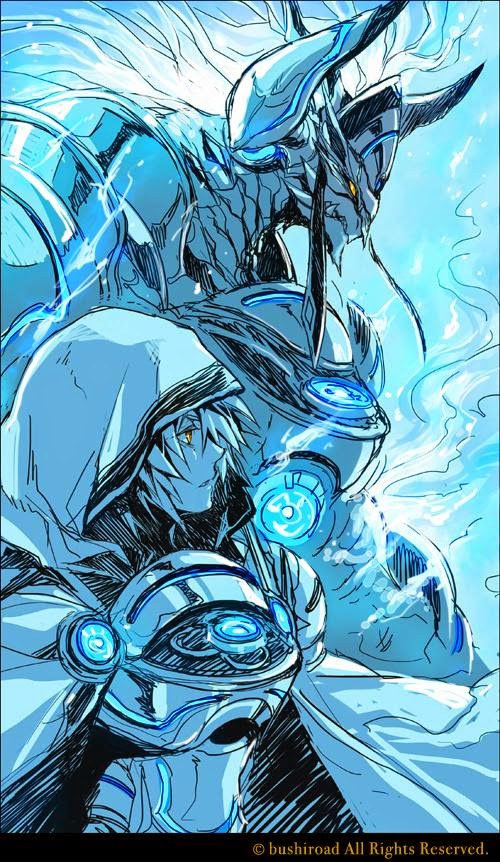
The Revengers have been subject to a number of updates through promo cards and alternative bosses, but the four truly competitive grade 3s used by professional cardfighters are Mordred Phantom, Raging Form Dragon, Dragruler Phantom and Phantom Blaster “Abyss.” As the subclan's break ride, Illusionary Revenger Mordred Phantom is a consistent staple of most Shadow Paladin decks. In light of how many different decks he can support, Mordred is arguably the best or second best grade 3 in the entire clan. When ridden over while at limit break 4, his counterblast 1 can superior call a grade 2 or lesser Shadow Paladin from the deck and give it +5000 power, while granting the standard +10000 power to your new vanguard. This works out as a net change of +/- 0, giving you back the card you put onto the vanguard circle as a card on the field, provided that you already had an open rearguard circle. (Superior calling over an occupied rearguard, while possible, counts as a loss in card advantage.)

As the humanoid alter ego of Phantom Blaster Dragon, the possibilities with Mordred's break ride skill are deliberately limitless. You can superior call one of the Blaster Dark variations from the deck to use their retire skill, and if you have Dorint on the field then regardless of which Dark you call it works out to a net counterblast 2. But you can also use Dorint with the first Dark Revenger to unflip the damage expended by Mordred and make the break ride completely costless, or you can superior call a unit that will itself superior call, like Dark Cloak Revenger Tartu or Wily Revenger Mana. Tartu is one of the primary reasons cardfighters originally latched onto Dark-Dorint as an unflipping engine.

She's a Revenger reimagining of Darkness Maiden Macha, with higher base power and the ability to counterblast 2 to superior call a grade 1 Revenger to the same column as herself. Meanwhile Mana is another variation on the formula with the same power as Macha, superior calling the grade 1 Revenger for no up front cost, but in exchange sending it to the bottom of the deck at the end of the turn. The two represent fundamentally different approaches, with Tartu providing a long-term advantage by superior calling a card like Dorint that can be put to use later after Tartu is retired or has intercepted, where Mana instead sets herself and the card she calls as sacrificial targets to compensate for the retire costs ahead of time.


If the opponent tries to spend the match denying Judgebau from going off by playing early defense, Mordred can superior call one of the Swordbreakers that Judgebau was unable to fetch and activate her draw skill while turning her into an 11000-power booster, forcing the card advantage out and partially negating their efforts. However, Mordred's primary use is with Raging Form and Blaster “Abyss,” making their initial attacks swing for exponentially higher numbers while ensuring that they also have a strong rearguard lane that turn which will draw out ~15000 shield before triggers are applied.

Since July 2013 Raging Form has reigned as the undisputed god of limit break Shadow Paladin, for good reason. While the other Revenger bosses are variations of Phantom Blaster Dragon, mechanically and visually Raging Form is a successor to Spectral Duke Dragon. His skill has no counterblast requirement; by retiring three Revenger rearguards at the end of the battle that Raging Form attacked, you can ride a copy of himself from your hand and give it +10000 power, allowing for a second attack at a 21000 power base. His secondary skill gives him +3000 power when he attacks for counterblast 1, allowing him to stand up to crossrides on a power level that pushes past the 23000 mark. Accounting for the sum -4 you take from retiring three rearguards and playing a copy of Raging from your hand, and the additional twin drive you gain from this second attack, his limit break works out to a net -2 overall in exchange for additional drive checks that can dramatically power up the last standing rearguard lane. Because riding over Form wipes the power gain he received from the break ride and any potential triggers, there is a particular incentive to keep a standing rearguard lane around to receive those triggers, which with Mordred's +5000 power boost can snowball into an unguardable rearguard lane once Raging Form's two attacks take out the opponent's perfect defense cards.

The only thing remotely difficult about Raging Form is getting the opponent to high damage before your break ride turn. During the BT12 period the general gameplan was to use Tartu to build up the field and serial call Dark Revenger with Dorint to repeatedly push the opponent down, then break ride Raging Form and continue on with an endgame plan to rapidly chew through the opponent's hand. If the opponent was already at 4~5 damage then each Raging Form attack would take at least two cards from their hand, and following the drive checks the last rearguard lane would average out to 26~31000 power. Today the fight is slightly more uphill for Raging. The retire cost and additional drive checks tend to consolidate all of your resources into your hand, which leads to large hand sizes in spite of the decreased card advantage, and also tend towards acquiring the remaining Raging Forms more easily as the game progresses. The primary opposition that Raging Form faces in present times is the format shift to legion instead of limit break, which took place in November 2014 for the English-language game. Starting in July 2014 Japanese cardfighters began pairing Raging Form with Phantom Blaster “Abyss,” eschewing the break ride entirely to focus on using two restanding vanguards in tandem.

Arguments against this deckbuild include that Raging Form is too slow for the format by needing to be at four damage while most legion decks will gladly stay at 2~3 damage for a much longer period of time, that Raging Form has always lacked synergy with Judgebau and the option for a restanding Phantom unit means that Judgebau ought to be paired with two Phantom grade 3s to ensure that double Swordbreakers can go off consistently, and that Raging Form's persona blastesque condition is too demanding when it may be better to reride “Abyss” than sit on Form until copies of it are exhausted. Raging Form apologists contend that even in “Abyss” the necessary damage required to make use of skills is so high that it may as well be a limit break, and that Raging Form is primarily intended as a finishing sequence after “Abyss” has gone off once or twice. The counterargument to this is that if “Abyss'” damage requirements are truly so high, then it benefits more from being paired with Mordred's limit break than it does Raging Form's, that because Raging Form cannot be searched by rearguard skills in the way that Mordred can trying to set up a clean transition from “Abyss” to RFD consistently is too demanding to be practical, and that Raging Form has better synergy when paired with its original base of support rather than by trying to go halfway in and halfway out of legion.

An explanation; Phantom Blaster “Abyss” is one of two successors to Phantom Blaster Dragon, and is part of a legion pair with Blaster Dark Revenger “Abyss.” At the end of the battle that “Abyss” attacked a vanguard during the turn that it performed legion, you can counterblast 2 and retire three Revenger rearguards to restand it. Because there is no reriding with “Abyss,” his power gain is not wiped by using the skill, which means that he retains both the triggers placed on him and the power from Mordred Phantom's break ride skill. Accounting for his own legion 20000 and the +2000 that “Abyss” gets just for attacking the vanguard, this is a ~32000 power column that restands just as big as it was before, which can easily overwhelm even a well prepared opponent. As a Phantom unit, “Abyss” can trigger Judgebau if you fail to set up your Mordred ride, and his 22000-power legion attack ensures that even after your resources are exhausted, unlike with RFD he will always attack with a strong center lane.

The caveat to “Abyss” is that his skill only works on the turn that he performs legion, and you can only legion once with each copy of “Abyss,” which provides a very limited window to restand with. Unlike RFD, “Abyss” does not have the benefit of being able to restand after attacking a rearguard. This may seem trivial, but one of the last support cards keeping the Link Joker clan's “Ω” Glendios deck relevant in the format is Rubidium, a grade 1 that when placed on the guardian circle can retire itself to redirect an attack to a rearguard with “Яeverse” in its card name. Because it changes the target of the attack to a rearguard, this deck can actually prevent “Abyss” from restanding, something which Raging Form need not fear. However, Glendios' status in the progressing legion format is in serious question, as it is not only competing with units that do not depend on limit break, but also with legion cards like Blaster Joker from within its own clan.

Perhaps the strongest and most overlooked argument in favor of Raging Form-“Abyss” lies in the data it provides you. A skilled fighter will always know exactly what kind of position they are in relative to their opponent because of the feedback the deck provides. If at any point prior to your third ride phase you draw “Abyss,” that is then your grade 3 ride. If you open with Raging Form in hand, this changes things; your second turn play is (if possible) Creeping Dark Goat to try to switch over to “Abyss,” but from the moment you ride Raging Form the role of the two grade 3s reverses. In order to avoid wasting copies of it, each Raging Form Dragon has to hit the vanguard circle before you can even consider “Abyss,” who has now become your endgame play to restore the deck after three restands with Form. Furthermore, riding Raging Form immediately makes Tartu live, as you now only need to maintain two counterblast for the endgame, and can generally anticipate healing at least once and set up an unflip with Blaster Dark Revenger to open up that counterblast. Raging Form-“Abyss” can also go to much higher damage numbers earlier as a safe play, maintain a strong hand size throughout the fight, and with two retire-based vanguards can play a defensive game of preventing the opponent from retiring or locking their own cards by racing to be the first to retire them.

So there are multiple ways to play both Raging Form and Blaster “Abyss,” and strong arguments in favor of each. Restanding is not the limit of the Revengers, however. Phantom Blaster has one last incarnation to draw on. Revenger Dragruler Phantom is a crossbreak ride of Mordred that rarely sees play as an independent deck, but often works as a supporting intermediary ride for both Raging Form and “Abyss.” Where other retire grade 3s hybridize Spectral Duke's restand into the clan, Dragruler instead reimagines Phantom Blaster Dragon's extra critical as an extra damage. During the main phase Dragruler can counterblast 1 and retire two Revengers to gain +10000 power and deal a point of damage to the opponent if they are at 4 or less.

This has been incorrectly characterized as burn damage by some fighters, but because it cannot actually kill the opponent it should be understood as a more dedicated form of extra critical attack. In a pre-legion format Dragruler effectively controls when the opponent is allowed to use their limit break, allowing you to starve them of their resources until you're certain that they're incapable of winning, and then send them to 4~5 damage. As a supporting unit to Form he works as one more step between Mordred and RFD, forcing the opponent to stare down a ~38000 power center lane and rearguards attacking for ~21000 power before they are adequately prepared to defend. Dragruler's crossride defense helps to survive the opponent's next turn so that you can transition into Raging Form for the coup de grace.

In legion format Dragruler serves a similar purpose, but for Phantom Blaster “Abyss” instead. This is a contested pairing because it eliminates the benefit of break riding with “Abyss” over Mordred, but the rationale behind it is that because damage and defense are much more important in legion format, the opponent will be both more devastated by and less prepared to guard Dragruler's limit break. The opponent will still benefit from their damage triggers, and in legion format because you are sending them to more damage than in limit break format there is a greater risk of this occurring, but at the very least Dragruler's power boosts will outweigh the opponent's defensive checks. Dragruler is a bizarre boss card because with every limit break after the first, the less you have to use him the better off you are. Retiring two rearguards to deal a damage is not so bad, but having to give up four or even six is a ridiculous cost to pay within a single turn and can cripple you beyond recovery if used poorly. Dragruler Phantom is thus the least self-writing of the Revenger bosses and also the most difficult to use, because he does not inherently dictate when or how to use his skill within his own card text. You have no option but to use Mordred, Raging Form and Blaster “Abyss” whenever you are able to; Dragruler gives you the option to use him as little or as much as you like, and to play him correctly you have to be keep an awareness about the opponent's drive checks and hand, the state of the game, and whether limit breaking is really necessary or not. If you choose to play him, there will both be games where Dragruler is absolutely pivotal, and games where he is completely useless. You do not always need to deal an extra damage, and if you choose to do so it may cost you the game because of the resources this demands.

As his own deck, Dragruler is one of the few vanguards to benefit from not running Blaster Dark variants. In place of them you use the Overcoming and Self-control Revengers, Rukea and Rakia. Rukea is a grade 2 that gains +3000 power whenever a grade 1 or lesser rearguard is called, while Rakia is his grade 1 counterpart that gets +3000 power whenever a grade 0 rearguard is called. Grade 0s like Freezing Revenger make ideal retire targets for Dragruler, and Swordbreakers cannot be retired for his limit break and so serve only as intermediary boosters in that deck. So after crossbreakriding Dragruler over Mordred and superior calling a rearguard (like the Revenger Masquerade variant) with Rukea and Rakia in your other column, you call two grade 0s (potentially over your Swordbreakers) from your hand and then retire them for Dragruler's limit break to send the opponent from 3 damage to 4.

By repeating this skill a second time with two more grade 0s, you not only get the opponent to 5 damage, but Dragruler is now a 43000 power column unboosted and Rukea and Rakia each have +12000 power on them; the column's total power is 40000. Your last rearguard lane, having the power from Mordred's break ride, will be at around 21000 power when boosted. Some Shadow Paladin fighters have been tempted to run stand triggers in the deck to capitalize on these high power lanes, but the problem with stands is that they force you to dedicate to a strictly chance-based element of the game that you have no control over, and in doing so you are required to play and attack with any available rearguards you have on preceding turns just in case you drive check a stand trigger, which conflicts with waiting for Judgebau to go off before making serious field dedication. This also unduly exposes yourself to opposing attacks on rearguards and/or retire skills. Rukea and Rakia have an incredible amount of synergy with Mana and Masquerade, as Mana can target grade 1 or less Revengers for her skill, and so pull out a Freezing Revenger that pumps up their column by +6000 power before she sends the trigger back to the deck at the end of the turn. Even if you don't draw Rukea, Rakia can still act as a 10000+ power booster for Masquerade, making a 22000-power column.

Rukea also has strong synergy with Judgebau, as he does not require the grade 1s called to be Revengers, only that the vanguard be a Revenger. Hence if you use Judgebau to go into double Swordbreakers while Rukea is on the field, Rukea will get +6000 power and spring a surprise attack on the opponent with more power than they were expecting.

The Dragruler deck is generally more difficult to master than either Raging Form or “Abyss,” but whether it's more rewarding or not is questionable. There's no doubt that he's effective as a supporting unit. Transforming the additional critical into an extra damage that makes every rearguard lethal is a brilliant reimagining of Phantom Blaster Dragon, and unlike his predecessor there is a genuine element of risk and reward to the card. One of the primary reasons that Dragruler is so effective as a supporting unit is because of the risk associated with him; in the games where you are better off not using his skill, having the option to transition into Raging Form or “Abyss” gives you an effective finishing move in what would otherwise be a vanilla deck. With Shadow Paladin having not yet received one of the proper BT17-on limit break enablers, playing dedicated Dragruler has become more and more difficult each day, so if you are to play him then you are better off weighing the options of Raging Form and “Abyss” as your primary grade 3s.

In addition to Phantom Blaster “Abyss,” Requiem at Dusk introduced a pair of new Revenger support cards that have proven invaluable in legion format. The first is the grade 2 Fighting Spirit Revenger Macart, whose rearguard skill superior calls a grade 1 or less Revenger at rest when you perform legion. Unlike Tartu and Mana, Macart is not restricted to calling units into the same column as himself. This allows you to easily replace your Swordbreakers once they've outlived their usefulness, offset the cost of retire skills and serves a powerful midgame purpose in building or recovering card advantage. Because of Macart's existence and the ability to fetch him with Mordred Phantom, it is incredibly difficult to punish Revengers for making aggressive plays. You're free to push the game early with both versions of Masquerade, and after the opponent has tried to retaliate by attacking and/or retiring your rearguards, respond by using Macart to get back to the units they thought you had lost.

Macart also allows for normally impossible plays. If you breakride Blaster “Abyss” while having only two available counterblast, you can superior call a Macart with Mordred's counterblast 1, then when you perform legion use Macart's skill to superior call Dorint to your opposite rearguard column. Dorint does not have to be standing to use his skill, so you're free to then call a Blaster Dark Revenger to his column to unflip a damage, leaving you again with two open damage for “Abyss'” retire skill.

Unfortunately, Macart also introduces the great flaw of Mordred-“Abyss.” Because of the high damage requirements of the deck to pull off its winning play, its ability to easily recoup lost card advantage, and the way in which this aspect both encourages open aggression and minimal defending, at every turn in the fight Mordred-“Abyss” incentivizes advancing the tempo of the game as much as possible. Every rearguard you have available sans Macart and Blaster Dark Revenger should be played the moment they are in your hand, to force the opponent to the lethal point at which your restanding 32000 power vanguard becomes a game-winning condition. You must convince the opponent to put you at limit break by pushing them to that same limit, and Macart dangerously enables this. If you refuse to do so, it gives over control of the game to the opponent and threatens to let them control your own damage. Ideally, they should be panicking, not choosing between putting you at limit break or otherwise, but giving you the fourth damage because they have no choice. Because of this rapid tempo, Mordred-“Abyss” games are often decided by initial hands rather than agency or smart play. Once you have the key combos down, it becomes a game of outrunning the opponent.

Hence, a saving grace of Raging Form-“Abyss” is that it shifts the timing of the limit break. Instead of needing limit break to begin your endgame gambit, in this deck you can pursue legion at the first opportunity and begin mowing into the opponent with Phantom Blaster “Abyss” early on, taking advantage of how it consolidates your rearguards into your hand to maintain a strong offensive and defensive midgame while protecting your field from retire skills, devouring them yourself to prevent them from being devoured by the opponent. Once at limit break and after your counterblast is exhausted, you can transition into Raging Form Dragon as your finisher. This option would eschew Macart entirely due to the removal of Mordred and subsequent lack of ability to search for him, instead taking advantage of Tartu or Mana with Rukea, alongside the two Blasters. The Mana option is a strong one, but comes with baggage attached. Running Mana generally means running Rakia, and if one goes then so does the other; Rukea and Rakia's power bonuses synergize with Mana superior calling the units that trigger their skills, and Rakia is one of the few units that can make Mana attack for more than 15000 power. Having a counterblast-free call option is excellent for Ragming Form-“Abyss” because it avoids dedicating counterblast entirely and provides the one superior call option that exists at a point of equilibrium between the others, being equally beneficial to both Raging Form and Blaster-“Abyss.” However, turning to Raging Form is not the only means by which to break the aggressive impetus of Mordred-“Abyss.”

Macart is related to a lesser used legion, Ambitious Spirit Revenger Cormack. His base skill gives him +3000 power when there is another unit in the center column, which can take the form of either a boosting unit or that of his legion mate Macart. If you take the first move then Cormack is an elegant means of forcing the opponent to take damage while still at grade 2, as he'll form a 19000 power line with any base 5000 or greater booster. And while in legion, by retiring any Shadow Paladin rearguard when he attacks, Cormack can gain an additional critical. Early game critical skills are excellent way of pushing the game, and Cormack synergizes with Macart by retiring the rested unit that Macart superior called when he performed legion.

If you run Cormack with Mordred, then he can either use the Swordbreakers as retire targets to make a double critical line with upwards of 33000 power, or after several turns of the opponent attempting to deny Judgebau from going off with high shield and perfect defense cards, you can then breakride Cormack and render all their efforts at midgame defense for naught. Having already exhausted most defensive options against Mordred while at 3 damage leaves the opponent in a precarious position against a double critical vanguard. The trick with Cormack is how many you're willing to dedicate to; three copies of each grade 3 including both Mordred and “Abyss?” Two Cormack, two Mordred and four “Abyss”? Balancing the grade 3 ratios in this deck is a matter of personal experience.

For now the last word in Revengers comes from G-FC01: Fighter's Collection 2015, out June 19th. While the future will see many strides released for the clan that the Revengers are capable of interacting with, at this time FC01's triple rare Shadow Paladin is the only stride that makes Revenger use a prerequisite. True Revenger, Dragruler Revenant's once-per-turn skill is activated in the main phase; by retiring one of your Revenger rearguards, if you have a heart card with Revenger in tis card name, you can search your deck for a grade 1 or less Revenger, call it to a rearguard circle, and have both Revenant and that unit gain +3000 power.

Revenant's skill is subtle in its importance. In a Phantom deck you can use it to make a solid midgame push, calling Rukea and Rakia to give Rukea +3000 power followed by Mana to bring out a Freezing Revenger, whose call will give both knights an additional +3000. Then by retiring Freezing Revenger for Revenant's skill and pulling out a Rakia or Masquerade, you can give another +3000 power to Rukea while solidifying Mana's +1 by exchanging the unit she called for a different one. This will result in Mana attacking for 18000 power, Dragruler Revenant for 36000 boosted, and Rukea for 28000 power, all prior to trigger checks. In an “Abyss” deck you can use Revenant to pull out a Dorint for Blaster Dark Revenger, or a Masquerade to make an unboosted 13000 power attack. While not an endgame card--nor even something remotely approaching Dragruler's "true" form--Dragruler Revenant is a consistent means to glue together your midgame and push the opponent into a difficult situation that will lead you to the end path. The card primarily benefits “Abyss” rather than a Phantom deck, and will likely be a staple one-of in Revenger decks for months to come.

In summary, the Revenger subclan has addressed every issue faced by the original run of the Shadow Paladins, and has carved a niche for itself in retiring multiple units per turn while also making high power vanguard and rearguard lanes. What the subclan lacks in a diversity of explosive card advantage options it makes up for in the high quality of what it has to work with. At this point in time the Revengers are Shadow Paladin itself, and face virtually no competition for that title. Hardcore Revenger fans will want to look into a Revenger-specific playmat from Ultra Pro; but those looking for a group truer to the spirit of the original Shadow Paladins will want to pass this one over, as for all their mechanical improvements the antiheroic tone of the Revengers is discordant with what once was.

Today's article was made possible by the donations of our patrons at Patreon. Cardfight Pro is funded by public contributions from readers like you.

Thursday, November 20, 2014

News: Blaster Joker Debuts at Fourth Kansai VGCS, Phantom Blaster “Abyss” Secures Top 2

November 16th, Kyoto, Japan. Almost a year ago Nouvelle Vague and Cecilia Musketeers were making headlines having topped at the first Kansai Vanguard CS; now in its fourth iteration, the championship series returned to its roots at hobby shop Yellow Submarine. Located on the fourth floor of a vertical stripmall comprising other small businesses like a pork ramen shop and nail salon, Yellow Submarine has been a permanent fixture in the area since 2009.

While the shop may be the same, the tournament results could not be more different. There were no Kagerou tops at the fourth Kansai CS. Instead Shadow Paladin's “Abyss” deck has continued its train of restanding dominance, piloted by Minorun and Mirutae in first and second. Minorun had previously served as the Forward for runner-up team "Over There, Here and There" at the eighth Battle City CS last March, and placed second at the Hokusetsu CS last August with Cat Butler Raizers. Meanwhile Mirutae placed fourth that same August with a pure Thing Saver deck at the Kin no Shacchi CS, and first place at Hokusetsu with “Abyss.”
Deck breakdown (80 participants in total)
25 Shadow Paladin
19 Kagerou
9 Royal Paladin
6 Link Joker
4 Gold Paladin
3 Genesis
2 Nova Grappler
12 Other
The preliminaries at the fourth Kansai CS consisted of four rounds of Swiss draw, followed by a cut to top 16 with tournament brackets implemented. Both the preliminaries and finals had a 40 minute time limit and followed a best of 3 games format. Starting at noon and closing at 7:40 PM Japanese time, first place was rewarded with a voucher guaranteeing them six boxes of the most recent booster set, while second, third and fourth place received vouchers for four, three and one boxes of the same. The vouchers become valid on December 5th 2014, on the release date of VG-G-BT01: Generation Stride.

While first and second were both Phantom Blaster “Abyss” decks as typical of recent tournaments, the most striking development by far was Shokushu in fourth with a Star-vader deck--the first such Link Joker top since Glendios dissolved at the end of the last Japanese national tournament. Shokushu had previously finished second with Thing Saver at the Kin no Shacchi CS, above where Mirutae had in that same month. At Kansai he placed using Dark Zodiac from BT17 as his primary grade 3, with the trial deck card Garnet Star and MBT01 boss Blaster Joker as supporting units.

Garnet Star was chosen as the alternative grade 3 due to the constraints legion mechanics place on deck space; Garnet and Joker share their legion mate Photon, and Joker can be searched from the deck using the grade 2 Dilaton, allowing Garnet to effectively stand in for the other unit because of Joker's exorbitant counterblast cost. Garnet's on-legion skill actually sets up the conditions for Dilaton to activate by locking two of the opponent's rearguards, and with all of these factors in mind Joker has an immense amount of synergy paired with Garnet. While Joker can be a powerfully disruptive play by retiring the opponent's legion mate, and with its field lock can actually prevent “Abyss” from being able to set up early on while powering up Lanthanum by up to +15000 power, the card is also dead weight once either counterblast or soul are exhausted and is a poor early game ride.

To avoid that early game Shokushu designed the deck with Garnet and Dark Zodiac as his primaries. As with Garnet, Zodiac's persona blast locks a frontrow and backrow rearguard, while its on-legion counterblast prevents the opponent's cards from unlocking during the end phase of their next turn, resurrecting the powers of “Ω” Glendios without being reliant on a pool of “Яeverse” units to maintain those locks. During the peak of Thing Saver-“Abyss'” reign Zodiac was unpopular due to a combination of its lock skills being ineffective against a vanguard capable of attacking three times in one turn, Glendios having Rubidium to completely nullify Thing Saver's strategy by redirecting his attack to a rearguard, and the general strength of Perdition Dragons versus the Link Joker matchup. With Blaster Joker available as a dramatic turnaround card capable of shutting down the Kagerou matchup and slowing down a game in a single turn, Thing Saver's restanding abilities curtailed by the September 29th restricted list, and Phantom Blaster “Abyss” as the primary threat of the format, the conditions are right for the Star-vaders to become prominent once again.

Minorun and Mirutae's Revenger decks are notably identical, and share a very similar structure with those that topped at the fourth Sapporo VGCS and second Brave Cup. Overall the present format appears to have stabilized in the Revengers' favor. They accounted for approximately 31% of the entries at Kansai, between the Brave Cup's 23% and Sapporo's 33%--enough to hold a majority over competing decks, and almost enough to constitute a perfect third of tournament results. Kagerou is the most significant opposition, with Dragonic Overlord the Great as the current contender. Thing Saver Dragon continues to haunt the background of these tournament results, but with Seeker support mostly cut off in upcoming booster sets, it's doubtful that the deck will ever fully recover from the Neon Messiah-on format shifts.

The VGCS tournaments are a series of unofficial tournaments organized by fans and cardshops. Unlike Bushiroad's larger official tournaments, most VGCS events are done using a best-of-three, Swiss tournament model. Turnout is typically 70-80 persons, but some events see 100 or more participants, all of whom compete using pseudonyms and internet handles rather than their real names as in official events. The VGCS model of fan-organized play has begun to gain popularity internationally, with the bi-monthly BeNeLux tournaments serving as their European equivalent, and there are now similar grassroots organizations emerging in the United States like the ARG Circuit series tournaments and the ongoing King of Cardfight competition in the American midwest.

First place: Minorun/みのるん
Grade 0
x1 Judgebau Revenger (FV)
x4 Healing Revenger HT
x4 Freezing Revenger DT
x4 Grim Revenger CT
x4 Revenger, Air Raid Dragon CT
Grade 1
x4 Dark Revenger, Mac Lir
x4 Barrier Troop Revenger, Dorint
x2 Transient Revenger, Masquerade
x3 Witch of Nostrum, Arianrhod
x1 Black-winged Sword Breaker
Grade 2
x4 Blaster Dark Revenger
x4 Blaster Dark Revenger “Abyss”
x4 Fighting Spirit Revenger, Macart
Grade 3
x4 Revenger, Phantom Blaster “Abyss”
x3 Illusionary Revenger, Mordred Phantom

Second Place: Mirutae/みるたえ
Grade 0
x1 Judgebau Revenger (FV)
x4 Healing Revenger HT
x4 Freezing Revenger DT
x4 Grim Revenger CT
x4 Revenger, Air Raid Dragon CT
Grade 1
x4 Dark Revenger, Mac Lir
x4 Barrier Troop Revenger, Dorint
x2 Transient Revenger, Masquerade
x3 Witch of Nostrum, Arianrhod
x1 Black-winged Sword Breaker
Grade 2
x4 Blaster Dark Revenger
x4 Blaster Dark Revenger “Abyss”
x4 Fighting Spirit Revenger, Macart
Grade 3
x4 Revenger, Phantom Blaster “Abyss”
x3 Illusionary Revenger, Mordred Phantom

Third place: Seven/セブン
Grade 0
x1 Advance Party Seeker, File (FV)
x4 Seeker, Loving Healer HT
x4 Margal DT
x2 Seeker, Platina Raider DT
x2 Certain Kill Seeker, Modron CT
x4 Seeker, Herald Breath Dragon CT
Grade 1
x4 Guardian Law Seeker, Shiron
x2 Good Faith Seeker, Cynric
x2 Sacred Wielding Seeker, Octavius
x1 Fail Seeker, Hasbasado
x4 Lake Maiden, Lien
x1 Glynngal Seeker
Grade 2
x4 Blaster Blade Seeker
x3 Full Bloom Seeker, Cerdic
x4 Crossbow Seeker, Gildas
Grade 3
x4 Seeker, Thing Saver Dragon
x4 Light Origin Seeker, Alfred XIV

Fourth place: Shokushu/しょくしゅ
Grade 0
x1 Black Ring Chain, Pleiades (FV)
x1 Recollection Star-vader, Tellurium HT
x3 Star-vader, Pixie Petal HT
x3 Star-vader, Nebula Captor DT
x3 Star-vader, Jailer Tail DT
x1 Star-vader, Meteoliger CT
x4 Star-vader, Apollo Nail Dragon CT
x1 Star-vader, Spark Doll CT
Grade 1
x4 Barrier Star-vader, Promethium
x4 Star-vader, Bolt Line
x2 Demonic Claw Star-vader, Lanthan
x3 Routing Deleter, Ganowek
Grade 2
x4 Star-vader, Astro Reaper
x4 Companion Star-vader, Photon
x3 Star-vader, Colony Maker
x1 Silence Star-vader, Dilaton
Grade 3
x4 Star-vader, Dark Zodiac
x2 Star-vader, Blaster Joker
x2 Star-vader, Garnet Star Dragon

Wednesday, October 22, 2014

News: Second Brave Cup Decklists Published, “Abyss”-Mordred Dominates Top 8

Nine hours ago the decklists from Chiba city's second Brave Cup were published, giving names to the decks that topped in the Cup over the 18th. Cup champion Azel is one of the first prominent Liberator cardfighters to emerge in the Neon Messiah-on format, and his victory is also the effective debut of the Bluish Flame Liberators in professional play. Alongside this, the Revenger subclan has come to renewed importance, with five members out of the tournament's top 8 playing Phantom Blaster “Abyss” paired with Mordred Phantom.

Up to this point “Abyss” was primarily paired with Raging Form Dragon as its alternative grade 3, as at the second Hokusetsu CS, third Kansai team tournament, and fifth Tachikawa VGCS. However, the Shadow Paladin use of “Abyss” with Raging Form paled in comparison to its Royal Paladin counterpart Thing Saver, who prior to recent rule reforms was also able to take advantage of “Abyss” as its supporting grade 3. Within the power vacuum created by Thing Saver-“Abyss'” collapse, these Mordred-based have emerged due to a combination of needing to succeed where Raging Form fell short, and as a result of greater discernment on the part of professional Shadow Paladin cardfighters.

This model for “Abyss”-Mordred had already coexisted alongside Raging Form from the beginning of their rivalry at the Hokusetsu championship. The argument for pairing “Abyss” with a break ride versus Form is that he will attack for greater power on his initial attack and every swing thereafter, and that the counterblast costs in “Abyss'” Legion deck are sizable enough that supporting him with Mordred's limit break does not significantly change the damage “Abyss'” restand is being played at. Even after counterblast is exhausted in this build, “Abyss” has a base attack of 22000 to fall back on. And with two Phantom grade 3 options, the subclan's primary first vanguard Judgebau is always available by grade 3. Even accounting for Revenger-specific retire, Judgebau into double Sword Breakers' draw skill is always worth investing because of how overwhelming it is in terms of advantage gain.

Furthermore, running two copies of Dragruler Phantom in addition to Mordred has been common practice for Shadow Paladin cardfighters. The methodology is that each individual point of damage carries greater weight in Legion format than it did in the limit break format, which makes crossbreakriding Dragruler a vital play that can push the opponent to 4 damage and then face down “Abyss” on the next turn as an alternative to jumping straight to “Abyss.” Dragruler also has combo potential with Rakia, a popular grade 1 choice for Japanese Revenger decks; by calling two grade 0s and then retiring them for Dragruler's limit break, Rakia becomes a 13000-power booster to make most rearguard lanes attack for 21000+ power.

Perhaps the most unusual adaptation of the Cup was the emphasis on running both incarnations of Blaster Dark Revenger. The grade 2's “Abyss” incarnation has generally made the circa BT12 pair of Dark Revenger and his custom unflipper Dorint obsolete, consolidating both of their skills into a single counterblast, but every top 4 Shadow Paladin cardfighter at the Brave Cup ran at least two copies of the old Dark Revenger and Dorint. The adaptation is made possible by Mordred's deck searching, and serves both as an alternative to rearguard plays of Revenger “Abyss” and as an unflipping engine to offset the counterblast 1 for Mordred's break ride skill.

Illust. Hagiya Kaoru.
Meanwhile tournament champion Azel's deck is a Bluish Flames build focusing on Prominence Glare from MBT01: Neon Messiah, with the trial deck boss card Percival as his secondary grade 3. Azel's deck is one of the most visible tops to run stand triggers, reflecting one of the latent developments of the Legion format. Some cardfighters are now prioritizing stands over draws due to a combination of the increased importance of the rearguard lanes, less emphasis on hand size where many prominent decks can maintain it innately, and the strong skills being given to stand triggers to compensate for their perceived shortcomings in comparison to the other three trigger types.

In the Liberators' case, Catchgal's skill allows for his cardfighter to superior call a Liberator from the top three cards of the deck when he's called from the deck. This creates a +1 in card advantage where successful, while also synergizing with Prominence Glare's retire skill--for counterblast 1 Glare can retire a Liberator to superior call one from the deck's top four, trading out Catchgal for a more useful rearguard like Josephus or Bruno while also building up towards Legion and eventually cycling that trigger back in.

Illust. Hagiya Kaoru.
As a whole Azel's deck focuses on passively building up card advantage through on-call skills, using the top 3 and 4 skills of Percival and Prominence Glare to add cards to the hand off of superior calling Josephus and Destiny Aglovale, and calling further from Lawful Trumpeter and Oaths Aglovale's top 3 skills. This makes it possible to play a field almost entirely from the deck, conserving the hand to put down replacements after dealing with retire skills from Perdition, Revenger and Brawler decks.

Prominence Glare serves as the new Liberators' major push. By discarding one of the deck's eight Bluish Flame cards after calling a rearguard from the deck, Glare gains an additional critical and prevents the opponent from calling grade 1 and greater cards to the guardian circle from their hand when it attacks; this simultaneously blocks perfect defense cards, Quintet Walls, and special defense units like Glendios' Rubidium or the Liberator's own Guinevere. With a center lane in the range of 27000 power, Glare demands 25000 shield for two-to-pass from most vanguards, generally taking out between three and five cards per turn to wear the opponent down while his fighter passively builds advantage off of superior calls.


The Bluish Flame Liberators from TD16: Divine Judgment of the Bluish Flames will be debuting in English alongside the “Abyss” Shadow Paladins from EB11: Requiem at Dusk on November 21st, while those Liberators from TD17 and MBT01 will reach the format on December 16th in VGE-BT16: Legion of Dragons & Blades ver.E.

The VGCS tournaments are a series of unofficial tournaments organized by fans and cardshops. Unlike Bushiroad's larger official tournaments, most VGCS events are done using a best-of-three, Swiss tournament model. Turnout is typically 70-80 persons, but some events see 100 or more participants, all of whom compete using pseudonyms and internet handles rather than their real names as in official events. The VGCS model of fan-organized play has begun to gain popularity internationally, with the bi-monthly BeNeLux tournaments serving as their European equivalent, and there are now similar grassroots organizations emerging in the United States like the ARG Circuit series tournaments and the ongoing King of Cardfight competition in the American midwest.

Second Chiba Brave Cup
First place:
Azel/アゼル
Grade 0
x1 Fire Passion Liberator, Guido (FV)
x4 Liberator of the Holy Tree, Elkia HT
x4 Liberator of Good Luck, Epona CT
x4 Steel Edge Liberator, Alvira CT
x4 Catchgal Liberator ST
Grade 1
x4 Shine Formation Liberator, Eldol
x4 Fast Chase Liberator, Josephus
x4 May Rain Liberator, Bruno
x2 Little Liberator, Marron
Grade 2
x4 Liberator of Destiny, Aglovale
x4 Liberator of Oaths, Aglovale
x3 Liberator, Lawful Trumpeter
Grade 3
x4 Bluish Flames Liberator, Prominence Glare
x4 Bluish Flames Liberator, Percival

Second place: Getsu-ei/月影
Grade 0
x1 Judgebau Revenger (FV)
x4 Healing Revenger HT
x2 Freezing Revenger DT
x4 Grim Revenger CT
x4 Revenger, Air Raid Dragon CT
x2 Grim Reaper CT
Grade 1
x4 Dark Revenger, Mac Lir
x2 Overcoming Revenger, Rakia
x1 Transient Revenger, Masquerade
x4 Barrier Troop Revenger, Dorint
x2 Black-winged Sword Breaker
Grade 2
x4 Blaster Dark Revenger “Abyss”
x2 Battle Spirit Revenger, Mackart
x4 Blaster Dark Revenger
x2 Nullity Revenger, Masquerade
Grade 3
x4 Revenger, Phantom Blaster “Abyss”
x2 Illusionary Revenger, Mordred Phantom
x2 Revenger, Dragruler Phantom

Third place: Healer/ヒーラー
Grade 0
x1 Judgebau Revenger (FV)
x4 Healing Revenger HT
x3 Freezing Revenger DT
x1 Lizard Witch, Aife DT
x4 Grim Revenger CT
x4 Revenger, Air Raid Dragon CT
Grade 1
x4 Dark Revenger, Mac Lir
x1  Self-control Revenger, Rakia
x2 Transient Revenger, Masquerade
x1 Sharp Point Revenger, Shadow Lancer
x4 Barrier Troop Revenger, Dorint
x1 Black-winged Sword Breaker
Grade 2
x4 Blaster Dark Revenger “Abyss”
x2 Overcoming Revenger, Rukea
x4 Blaster Dark Revenger
x2 Wily Revenger, Mana
Grade 3
x4 Revenger, Phantom Blaster “Abyss”
x2 Illusionary Revenger, Mordred Phantom
x2 Revenger, Dragruler Phantom

Fourth place: Lallshare
Grade 0
x1 Judgebau Revenger
x1 Frontline Revenger, Claudas
x4 Healing Revenger HT
x4 Freezing Revenger DT
x4 Grim Revenger CT
x4 Revenger, Air Raid Dragon CT
Grade 1
x4 Dark Revenger, Mac Lir
x2 Overcoming Revenger, Rakia
x3 Transient Revenger, Masquerade
x2 Revenger, Dark Bond Trumpeter
x2 Barrier Troop Revenger, Dorint
Grade 2
x4 Blaster Dark Revenger “Abyss”
x3 Overcoming Revenger, Rukea
x2 Blaster Dark Revenger
x2 Battle Spirit Revenger, Mackart
Grade 3
x4 Revenger, Phantom Blaster “Abyss”
x3 Illusionary Revenger, Mordred Phantom
x1 Revenger, Dragruler Phantom

Monday, March 10, 2014

News: Fireball VGCS Decklists, Hakata and Sapporo Tournaments Dominated by Kagerou, Post-BT15 Aqua Force Emerges

The third Laketown Vanguard Championship decklists went up on Card Shop Fireball's official blog early yesterday morning, showcasing some of the first competitive decks of the Infinite Rebirth-on format. Tournament winner Kado's “Ω” Glendios deck is of particular interest in part because it's the first Glendios deck seen in tournament play, and also due to its unusual composition, running a huge count of twelve grade 3s and just seven grade 2s. Previously only Aqua Force, Dimension Police and Nova Grappler cardfighters tended to run grade 3 heavy decks on a regular basis, due to their variety of grade 3 options and necessity for two or more gameplans in one deck, but Glendios is a different beast entirety. Some concern over the validity of the results has been expressed due to this Fireball CS only seeing a turnout of 34 persons when 60~80 is more common in VGCS events, but now that the decklist is visible it's clear that a thorough amount of work was put into its construction.

The high grade 3 count was generally anticipated by experienced Link Joker cardfighters due to the overall strategy of the build. “Ω” Glendios decks as a rule now rely on either Omega himself or Star-vader “Яeverse” Cradle Cradle; both of these boss cards use Link Joker's signature Lock mechanic by calling cards with  “Яeverse” in their name to rearguard circles, and accordingly can make any “Яeverse” into a Link Joker unit to promote synergy. In order to use their skills effectively, a high grade 3 count is necessary. Kado also exploited this to his advantage by running six different “Яeverse” cards, five of them as single copies, in order to obscure exactly how many he was running from his opponents. The core Omega strategy hinges on using Glendios in tandem with Ruin Magician, Praseodymium, Rubidium, Magnet Hollow, any two Reverse cards and the first vanguard World Line Dragon. Prior to hitting grade 3, Glendios' early game primarily revolves around trading Reverse cards in hand at the beginning of each ride phase with World Line's skill to search for other Link Joker units, avoiding the problems associated with failing to reach grade 2, and ideally replacing the Reverse cards discarded with other Reverse cards, primarily Cradle.

Magnet Hollow is the build's most valuable grade 2 because of how it instantly adds a Reverse card to hand for a single counterblast when its attack hits, which lets Glendios or Cradle Lock one card per turn, and Glendios can then use its limit break to cast Omega Lock and prevent the opponents' cards from unlocking for one turn. Omega can then get those Reverse cards back by calling Ruin Magician, who for counterblast 1 returns a Reverse card from the drop zone to the hand for each other Reverse on a rearguard circle, and unflip the damage with Praseodymium who operates on the same principle as Ruin. Rubidium is a special card that changes the target of the opponent's attack a rearguards with Reverse in its name, which compensates for the lower overall shield of a grade 3-heavy deck, and prevents skills that only activate when attacking a vanguard from going off.

Although these tactics were conceived with the idea in mind of using Omega Glendios' ultimate break skill to achieve an alternate win condition--automatically winning at the beginning of the main phase if the opponent has 5 or more Locked cards in play--the real outcome of fights with Omega have varied immensely. Being restricted to Locking a single card each turn (and only able to potentially subvert that with the occasional Cold Death Dragon who gives the opponent a card from their deck in the Locked position) achieving World End is frequently an unrealistic goal. Instead Glendios' main strategy has been to stall the opponent out by being able to Lock both frontrow rearguards with relative ease and cast Omega Lock while recycling the discarded cards, immensely slowing down games until they take double the amount of turns to complete. Since Omega powers up all Reverses to have a 15000 power base, the opponent is denied the ability to use their rearguards while Omega's strike for higher numbers on average.

The key weakness to the Glendios deck is its reliance on having Reverse cards available. None of these card skills can activate without Reverse cards already existing on the field or in the hand. Because of this, World Line Dragon's Reverse-discarding skill is not always an optimal play even though there's a limited window that it can be used inside of. Having those Reverse becomes a double-edged sword by enabling stronger plays while weakening Omega's ability to defend earlier in an aggressive format. You can jump to the decklists by searching the page for [3LVGCS]

At the third Hakata VGCS, Nouvelle Vague has continued a steady train of dominance under first place cardfighter Seishirou, while Dragruler-Raging Form and Minerva fighters are managing to hold their own with it in the top ranks of tournament play. In particular, the new definitive Revenger deck is clearly emerging in these early tournaments. Taking a leaf from EX's deck from the Half Moon VGCS, the basic framework of Kaakun's build was two of each Phantom grade 3 paired with four copies of Raging Form Dragon and a supporting rearguard lineup of double Judgebaus into double Sword Breakers with multiple ways to superior call the second Judgebau Revenger through Mana, Tartu and Darkbond, and the paired rearguards Rakia and Lukea who power up when low-grade rearguards are called. The most surprising shared feature of these decks is the absence of Blaster Dark Revenger, whose field control and unflipping with Dorint once made him a staple of the Revenger build. You can jump to the decklists directly by searching the page for [3HVGCS]

The third Hakata VGCS had 93 participants in all, with a burgeoning number of Glendios cardfighters alongside the established Nouvelle and Shadow Paladin decks. A complete breakdown of the tournament is below;
34 Kagerou (25 Nouvelle 9 Overlord)
18 Shadow Paladin
9 Link Joker (5 Glendios 4 Chaos Breaker)
8 Genesis
6 Gold Paladin
6 Pale Moon
3 Aqua Force
3 Narukami
2 Dimension Police
2 Nova Grappler
1 Neo Nectar
1 Royal Paladin
Original photo by SapporoVGCS.
Meanwhile word has gotten out that Kagerou is likewise dominating the first Sapporo VGCS over on the opposite end of the archipelago. Sapporo's top 8 was made up of three Kagerou, three Link Joker, one Shadow Paladin and one Aqua Force cardfighters. As this is the first major headway for Aqua Force in the wake of BT15, many observers are eager to see where professional cardfighters have developed the clan in the first two weeks of the new format.


The VGCS tournaments are a series of unofficial tournaments organized by fans and cardshops. Unlike Bushiroad's larger official tournaments, most VGCS events are done using a best of 3, Swiss tournament model. Turnout is typically 70-80 persons, but some events see 100 or more participants, all of whom compete using pseudonyms and internet handles rather than their real names as in official events.

Third Laketown/Fireball VGCS [3LVGCS]
First place: Kado/カド
Grade 0
x1 Star-vader, World Line Dragon (FV)
x4 Star-vader, Stellar Garage HT
x4 Star-vader, Meteoliger CT
x3 Star-vader, Weiss Soldat CT
x4 Star-vader, Nebula Captor DT
x1 Star-vader, Scouting Felis DT
Grade 1
x4 Star-vader, Ruin Magician
x4 Carved Seal Star-vader, Praseodymium
x3 Barrier Star-vader, Promethium
x3 Taboo Star-vader, Rubidium
Grade 2
x4 Star-vader, Magnet Hollow
x3 Star-vader, Cold Death Dragon
Grade 3
x3 Star-vader, “Ω” Glendios
x4 Star-vader, “Я” Cradle
x1 Demon God Marquis, Amon “Я”
x1 Covert Demonic Stealth Dragon, Hyakki Vogue “Я”
x1 Eradicator, Vowing Saber Dragon “Я”
x1 Silver Thorn Dragon Queen, Luquier “Я”
x1 Ice Prison Dark Lord, Cocytus “Я”

Second place: Black-rimmed Glasses/くろぶちめがね
Grade 0
x1 Red Pulse Dracokid (FV)
x4 Dragon Dancer, Barbara HT
x1 Seal Dragon, Artpique DT
x4 Gattling Claw Dragon DT
x4 Blue-Ray Dracokid CT
x3 Embodiment of Spear, Tahr CT
Grade 1
x2 Dragon Monk, Gojo
x2 Wyvern Guard, Barri
x2 Dragon Dancer, Maria
x4 Calamity Tower Wyvern
x4 Nouvelle Roman Dragon
Grade 2
x2 Flame Edge Dragon
x4 Berserk Dragon
x4 Nouvelle Critique Dragon
Grade 3
x1 Cruel Dragon
x4 Dauntless Drive Dragon
Grade 4
x4 Transcendence Dragon, Dragonic Nouvelle Vague

Third Hakata VGCS [3HVGCS]
First Place: Seishirou
Grade 0
x1 Red Pulse Dracokid (FV)
x4 Seal Dragon, Sharting HT
x1 Seal Dragon, Artpique DT
x4 Gattling Claw Dragon DT
x4 Seal Dragon, Biera CT
x3 Blue-ray Dracokid CT
Grade 1
x2 Dragon Monk, Gojo
x4 Seal Dragon, Rinocross
x4 Calamity Tower Wyvern
x4 Nouvelle Roman Dragon
Grade 2
x2 Dragonic Burnout
x3 Berserk Dragon
x4 Nouvelle Critique Dragon
x2 Demonic Dragon Berserker, Kumbhanda
Grade 3
x1 Cruel Dragon
x4 Dauntless Drive Dragon
Grade 4
x3 Transcendence Dragon, Dragonic Nouvelle Vague

Runner-up: Kaakun
Grade 0
x2 Judgebau Revenger (FV)
x4 Grim Revenger CT
x4 Revenger, Area Raid Dragon CT
x4 Freezing Revenger DT
x4 Healing Revenger HT
Grade 1
x4 Dark Revenger, Mac Lir
x2 Black-winged Sword Breaker
x1 Revenger, Dark Bond Trumpeter
x2 Transient Revenger, Masquerade
x2 Brunt Revenger, Shadow Lancer
x2 Self-control Revenger, Rakia
Grade 2
x3 Overcoming Revenger, Lukea
x4 Nullity Revenger, Masquerade
x2 Wiles Revenger, Mana
x2 Dark Cloak Revenger, Tartu
Grade 3
x2 Illusionary Revenger, Mordred Phantom
x2 Revenger, Dragruler Phantom
x4 Revenger, Raging Form Dragon

Third Place: Jiou
Grade 0
x1 Vivid Rabbit (FV)
x4 Witch of Lemons, Limoncello CT
x1 Cyber Tiger CT
x4 Battle Maiden, Kukurihime CT
x3 Fancy Monkey DT
x4 Witch of Big Pots, Laurier HT
Grade 1
x4 Witch of Apples, Cider
x3 Witch of Frogs, Melissa
x4 Goddess of Protection, Kushinada
x2 Ordain Owl
Grade 2
x3 Witch of Ravens, Chamomile
x4 Grape Witch, Grappa
x4 Goddess of Trees, Jupiter
Grade 3
x4 Omniscience Regalia, Minerva
x4 Regalia of Wisdom, Angelica

Thursday, July 11, 2013

News: FR2013 Tokyo Regional Decklists, Nebula Lord and Raging Form Claw Their Way Up the Ranks

The Fighter's Road 2013 Tokyo regional results are out, giving us our first look at what a professional Raging Form Dragon deck looks like, as well as the first pro Link Joker deck ever played. It wouldn't be an understatement to call Tokyo the most anticipated regional yet, as the updates from VG-BT12: Binding Force of the Black Rings have brought with them sweeping changes to the format and the proper debut of Lock. The once-stable environment of BT10-on, dominated by Eradicator and Liberator decks, has been shaken up considerably by Tokyo's top 4. The addition of Vowing Saber Dragon “Я” to the standard Eradicator deck has narrowly put Narukami cardfighter Tatsuya Tanaka at the top, followed by Imanishi Kouichi's Raging Form and Nagata Shou's Nebula Lord, but the effusion of Eradicator decks has reportedly been stemmed as discussion now turns toward the Revenger and Star-vader subgroups.

To recap the situation, Dragonic Descendant began his reign of dominance in the Osaka branch of the Asia Circuit Memorial Tournament, where tournament winner Uemura Shouhei and runner-up Nishiyama Daiki codified the basic Descendant deck. Descendant was turned to for combining his self-stand skill with an extra critical, which in the eyes of Japanese pros combined some of the strengths of Dragonic Overlord The End and Majesty Lord Blaster, which were almost unplayable under the then-enforced January 1st restricted list. To be absolutely certain that Majesty could not compete in the Memorial Tournament, Bushiroad also instituted special rules that each deck had to have more than four grade 3s, in response to Nakamura Mitsuaki's Blaster deck from the 2013 Trio Festival which got around the restricted list by playing one copy of Majesty with three Soul Saver Dragons and using the extra deck space for additional Blaster units so that Wingal Brave's skill could be used to search Majesty. Descendant thus did not have Majesty or DOTE competing with him, bypassing the gauntlet that many previous decks have had to deal with and then becoming cemented as the go-to tournament deck. This was followed by Descendant placing first at Tokyo, second at Hakata and first at Nagoya, with Kokubo Hikaru's Nagoya decklist drawing attention for being a card-for-card copy of Uemura Shouhei's.

Then during the unofficial Vanguard Championship tournaments in April, the top three spaces of the best 4 at the Kyoto VGCS were taken by Descendant, as well as the top two spaces of the Kanto VGCS. Descendant also placed second in the A block of the official Fighter's Cup and first in B block of the Fight Royale. In May Bushiroad revised the restricted list, creating the May 11th list that brought back DOTE as well as Alfred but kept Majesty and Tsukuyomi restricted while Descendant was added to the list. This somewhat curbed Descendant's control of the Japanese scene, but Narukami cardfighters remained undeterred by the list, running extra copies of Vowing Sword and Gauntlet Buster Dragon in his place as a holdover until one of those two copies were drawn, and his dominance continued into the next VGCS tournament which had preemptively adopted the rules of the list four days prior to its actual start date. Descendant placed first in this Hachiouji VGCS, and repeated this feat at the onset of the Fighter's Road 2013 national tournament in Sendai as well as at Kyoto and Kanazawa.

This string of victories was broken by Okudaira Ryousuke at FR2013 Hiroshima, where he took first place using a Dudley Emperor-Bad End Dragger deck. While Yoshida Yuuta's Descendant deck still made it to second place, Emperor had not received heavy recognition at higher level play up to this point and essentially came out of left field, putting real doubt on if Descendant was really going to last through the duration of this current restricted list. Curiously, Descendant has not been especially popular in the juniors' division until today, which supported the suspicions that part of Descendant's success was owed to the same stubbornness that kept Soul Saver Dragon, Majesty Lord Blaster, Dragonic Overlord The End and Goddess of the Full Moon at the height of tournament play for so long. Every previous high-end deck in the Japanese scene has been buried by either direct decree from Bushiroad or by new cards from the same clan outmoding the old ones in the eyes of pro fighters. Majesty himself is even now going toe-to-toe with Descendant out of that same obstinance. While Descendant would go on to place first in Fukuoka, second place was taken by an Eradicator deck that didn't run him and instead used Sweep Command's break ride with Spark Horn Dragon. From this the idea surfaced that rather than Descendant himself being the dominating force of this tournament season, it is actually the entire Eradicator framework with Descendant and Gauntlet Buster as its dressing--an idea that veteran cardfighters of 2011 are all too familiar with, considering some of the crazier decks that the Barcgal framework was driving in that year. Unlike with Barcgal, there is no one card that Uemura's model of the deck would fall apart without. The Eradicators are an ever-growing snowball of cards that are good individually but overwhelming together, and the only thing that's going to stop their progress is the kind of impermeable evolution of strategy that Okudaira demonstrated at Hiroshima and that Gotou Kiyomi did in last year's tournament. Neither of these cardfighters made sweeping revisions to their respective builds. All they did was make their decks speak modern Vanguard with small changes that would give them concrete early, mid and endgame strategies effective in the current format. This brings us to now.

BT12's release has been anticipated because while Vowing Saber has given the Eradicators another tool to play around with, Link Joker and Shadow Paladin are FR2013's wild cards. At the very same VGCS where Descendant made its debut prior to the Memorial Tournament, Shadow Paladin was seemingly geared to start the tournament season strong as it headed in with the promise of the first new support in years coming further down the line. It speaks to the developing mind set of pro play that Descendant's tournament debut was only second place. With Shadow Paladin finally updated for modern times and Raging Form's own debut being "only second place," the throne is once again disputed as Imanishi and Nagata's shaking of the brackets has ignited new possibilities. The sudden inflation in prices for Shadow Paladin and Link Joker cards, particularly Raging Form and Nebula Lord, has pointed to Japanese pros potentially being on the verge of jumping ship to these new decks. Like DOTE and Majesty before it, Descendant may turn out to be that same breed of pro deck that commonly does well throughout a season and then drops off when the championship finals come around; FR2013 could very well be a repeat experience of FR2012's underdog championship.

In junior class tournament news, one Nakamura Shunto may actually be the return of an established junior pro cardfighter, third place in FR2012. The Nakamura Shunto that we are seeing today has played very differently from the one of the past however, coming in second place and now contending for the national title with a Scarlet Witch deck, likely in light of Majesty now being restricted. Nakamura's contemporaries are shrugging at the restriction, however; Misawa Kentarou from the open division is undeterred by the list, running two copies of Majesty with one Soul Saver Dragon and twelve Blaster cards among his grade 1 and 2 units to use Wingal Brave's search skill with.

In the student-only division of the VF High School Championship, Ueno Yuuki's unorthodox Granblue deck has seen a lot of interest for its very tech-heavy build. The deck runs twelve critical triggers, with Rough Seas Banshee and the grade 3 Basskirk serving as a soul engine to fuel its three copies of Dancing Cutlass as well as the Deadly series cards. For field control options, Ueno selected the much-beloved Cocytus for his on-ride counterblast 2 and the much less frequently played Negromarl for the rearguard, one of the weakest grade 3s in the game that clocks in at just 8000 power but can also call any unit from the drop zone to any rearguard circle with his skill. For endgame limit breaks, Ueno also ran a single copy of Malefic Dragon, a unit that specifically fights units with 12000+ power like Majesty Lord Blaster and the many crossrides now in the game, by gaining +10000 power when it attacks them. While Ueno's deck is very far from standard Granblue and follows a difficult to master playstyle, his innovative approach has breathed some life back into the undead clan and the results speak in his favor.

With six tournaments completed, there are now just two branches of FR2013 remaining. Sapporo and Nagoya will bring us the last candidates for the championship title, with the tournaments being held on the 14th and 15th. The national championship finals will be on August 11th, closing the summer tournament with the coronation of Japan's 2013 champion.

Open Class Regional Tournament
Regional Champion: Tatsuya Tanaka/田中達也
Grade 0
x1 Ambush Dragon Eradicator, Linchu (FVG)
x4 Eradicator, Yellow Gem Carbuncle CT
x4 Demonic Dragon Eradicator, Seiobo HT
x4 Divine Spear Eradicator, Pollux CT
x4 Eradicator Dragon Mage DT
Grade 1
x2 Rising Phoenix
x4 Eradicator Wyvern Guard, Guld
x4 Eradicator, Demolition Dragon
x4 Iron Blood Eradicator, Shuki
Grade 2
x3 Eradicator, Spark Rain Dragon
x4 Dragonic Deathscythe
x4 Fiendish Sword Eradicator, Cho-ou
Grade 3
x2 Eradicator, Dragonic Descendant
x3 Eradicator, Vowing Saber Dragon “Я”
x3 Eradicator, Vowing Sword Dragon

Runner-up: Imanishi Kouichi/今西弘一
Grade 0
x1 Harbinger Revenger, Claudus (FVG)
x4 Healing Revenger HT
x4 Freezing Revenger DT
x4 Grim Revenger CT
x4 Revenger, Air Raid Dragon CT
Grade 1
x4 Dark Revenger, Mac Lir
x4 Morale Revenger, Dorin
x4 Transient Revenger, Masquerade
x1 Sacriledge Revenger, Berith
Grade 2
x4 Blaster Dark Revenger
x4 Nullity Revenger, Masquerade
x4 Black Clothed Revenger, Tartu
Grade 3
x4 Revenger, Raging Form Dragon
x4 Illusion Revenger, Mordred Phantom

Doctor O's Prize: Nagata Shou/長田祥
Grade 0
x1 Star-vader, Dusttail Unicorn (FVG)
x4 Star-vader, Stellar Garage HT
x4 Star-vader, Meteoliger CT
x2 Star-vader, Weiss Soldat CT
x4 Star-vader, Nebula Captor DT
x2 Star-vader, Scouting Ferris DT
Grade 1
x4 Barrier Star-vader, Promethium
x4 Demonic Claw Star-vader, Lanthanium
x4 Hollow Twin Blades, Binary Star
x3 Opener of the Black Door
Grade 2
x3 Star-vader, Mobius Breath Dragon
x3 Evil Claw Star-vader, Niobium
x3 Unrivaled Star-vader, Radon
x2 Shooter of the Singularity
Grade 3
x4 Star-vader, Infinite Zero Dragon
x3 Star-vader, Nebula Lord Dragon

Junior Class Regional Tournament
Regional Champion: Funayama Yuiga/舩山唯我

Grade 0
x1 Eradicator, Strikedagger Dragon (FVG)
x4 Demonic Dragon Eradicator, Seiobo HT
x3 Eradicator, Blue Gem Carbuncle DT
x4 Eradicator, Yellow Gem Carbuncle CT
x4 Eradicator of the Divine Spear, Pollux CT
Grade 1
x2 Rising Phoenix
x4 Sword Dance Eradicator, Hisen
x4 Eradicator, Wyvern Guard Guld
x1 Eradicator, Demolition Dragon
x2 Iron Blood Eradicator, Shuki
Grade 2
x4 Eradicator, Spark Rain Dragon
x4 Supreme Army Eradicator, Zuitan
x3 Fiendish Sword Eradicator, Chou-Ou
x1 Homing Eradicator, Rochishin
Grade 3
x2 Eradicator, Dragonic Descendant
x3 Eradicator, Gauntlet Buster Dragon
x3 Eradicator, Vowing Sword Dragon

Runner-up: Nakamura Shunto/中村俊斗
Grade 0
x1 Little Witch, LuLu (FVG)
x4 Lozenge Magus HT
x4 Psychic Bird CT
x4 Oracle Guardian, Nike CT
x4 Battle Sister, Ginger CT
Grade 1
x4 Oracle Guardian, Gemini
x2 Emerald Witch, LaLa
x2 Battle Sister, Omelette
x4 Battle Sister, Chocolat
x3 Battle Sister, Cream
Grade 2
x2 Battle Sister, Tart
x2 Promise Daughter
x4 Battle Sister, Mocha
x2 Silent Tom
Grade 3
x4 Scarlet Witch, CoCo
x4 Battle Sister, Cookie

Doctor O's Prize: Okura Takumi/小倉拓海
Grade 0
x1 Spark Kid Dragoon (FVG)
x3 Eradicator, Yellow Gem Carbuncle CT
x4 Demonic Dragon Eradicator, Seiobo HT
x3 Divine Spear Eradicator, Pollux CT
x4 Eradicator Dragon Mage DT
x2 Eradicator, Blue Gem Carbuncle DT
Grade 1
x4 Eradicator Wyvern Guard, Guld
x4 Eradicator, Demolition Dragon
x1 Iron Blood Eradicator, Shuki
x3 Rising Phoenix
x2 Eradicator of the Ceremonial Bonfire, Castor
Grade 2
x4 Eradicator, Spark Rain Dragon
x2 Fiendish Sword Eradicator, Cho-ou
x1 Twin Gun Eradicator, Hakushou
x3 Dragonic Deathscythe
x1 Supreme Army Eradicator, Zuitan
Grade 3
x2 Eradicator, Dragonic Descendant
x3 Eradicator, Gauntlet Buster Dragon
x3 Eradicator, Vowing Sword Dragon

Vanguard Fight High School 2013 Summer, Open Class Tokyo Regional Tournament Championship Team
Watanabe Kento/渡邉健斗
Grade 0
x1 Spark Kid Dragoon (FVG)
x4 Eradicator, Yellow Gem Carbuncle CT
x4 Demonic Dragon Eradicator, Seiobo HT
x4 Divine Spear Eradicator, Pollux CT
x4 Eradicator Dragon Mage DT
Grade 1
x4 Eradicator Wyvern Guard, Guld
x4 Eradicator, Demolition Dragon
x2 Iron Blood Eradicator, Shuki
x3 Rising Phoenix
Grade 2
x4 Eradicator, Spark Rain Dragon
x4 Fiendish Sword Eradicator, Cho-ou
x4 Dragonic Deathscythe
Grade 3
x2 Eradicator, Dragonic Descendant
x4 Eradicator, Gauntlet Buster Dragon
x2 Eradicator, Vowing Sword Dragon
Misawa Kentarou/三澤健太郎
Grade 0
x1 Wingal Brave (FVG)
x4 Enthusiastic Jewel Knight, Polly HT
x3 Margal DT
x3 Blazing Jewel Knight, Rachelle
x3 Alabaster Owl CT
x3 Bringer of Good Luck, Epona CT
Grade 1
x4 Flash Shield, Iseult
x4 Little Sage, Marron
x4 Knight of Friendship, Kay
x2 Pongal
x1 Blaster Javelin
Grade 2
x4 Blaster Blade
x4 Blaster Dark
x4 Star Call Trumpeter
x3 Blaster Blade Spirit
Grade 3
x2 Majesty Lord Blaster
x1 Soul Saver Dragon

Matsumoto Yuusuke/松本佑典
Grade 0
x1 Little Witch, LuLu (FVG)
x4 Battle Sister, Chai HT
x4 Psychic Bird CT
x4 Oracle Guardian, Nike CT
x4 Battle Sister, Ginger CT
Grade 1
x4 Oracle Guardian, Gemini
x1 Battle Sister, Maple
x1 Battle Sister, Omelette
x4 Battle Sister, Chocolat
x3 Battle Sister, Cream
Grade 2
x2 Battle Sister, Tart
x2 Battle Sister, Macaron
x4 Battle Sister, Mocha
x4 Silent Tom
Grade 3
x4 Scarlet Witch, CoCo
x4 Battle Sister, Cookie

Vanguard Fight High School 2013 Summer, Student-only Class Tokyo Regional Tournament Championship Team
Imaizumi Tsukasa/今泉司
Grade 0
x1 Ambush Dragon Eradicator, Linchu (FVG)
x4 Demonic Dragon Eradicator, Seiobo HT
x4 Eradicator Dragon Mage DT
x4 Eradicator, Yellow Gem Carbuncle CT
x4 Eradicator of the Divine Spear, Pollux CT
Grade 1
x3 Rising Phoenix
x4 Eradicator, Wyvern Guard Guld
x2 Eradicator, Demolition Dragon
x3 Iron Blood Eradicator, Shuki
x3 Eradicator of the Ceremonial Bonfire, Castor
Grade 2
x4 Eradicator, Spark Rain Dragon
x3 Fiendish Sword Eradicator, Chou-Ou
x2 Eradicator, Thunder Boom Dragon
x3 Dragonic Deathscythe
Grade 3
x2 Eradicator, Dragonic Descendant
x4 Eradicator, Gauntlet Buster Dragon
x1 Eradicator, Sweep Command Dragon

Ueno Yuuki/上野祐樹
Grade 0
x1 Skeleton Assault Troops Captain (FVG)
x2 Doctor Rouge HT
x2 Rick the Ghostie HT
x4 Rough Seas Banshee CT
x4 Knight Spirit CT
x4 Ghoul Cannonball CT
Grade 1
x3 Samurai Spirit
x3 Dancing Cutlass
x3 Dandy Romario
x1 Deadly Nightmare
x3 Gust Djinn
Grade 2
x2 Captain Nightmist
x4 Ruin Shade
x1 Skeleton Knight
x4 Commodore Blueblood
x2 Deadly Spirit
Grade 3
x2 King of Demonic Seas, Basskirk
x2 Witch Doctor of the Abyss, Negromarl
x2 Ice Prison Necromancer, Cocytus
x1 Dragon Undead, Malefic Dragon

Kurihara Ryou/栗原遼
Grade 0
x1 Little Fighter, Cron (FVG)
x4 Liberator of Hope, Epona CT
x4 Strike Liberator CT
x4 Flame of Victory CT
x4 Elixir Liberator HT
Grade 1
x1 Silver Fang Witch
x4 Curved Blade Liberator, Josephus
x2 Little Liberator, Marron
x4 Halo Liberator, Mark
x2 May Rain Liberator, Bruno
Grade 2
x2 Liberator of the Flute, Escrad
x3 Blaster Blade Liberator
x4 Liberator of Royalty, Phallon
x4 Liberator of Silence, Gallatin
Grade 3
x4 Liberator of the Round Table, Alfred
x3 Wolf Fang Liberator, Garmore